The Seldoms’ Philip Elson Dishes on Mix With Six

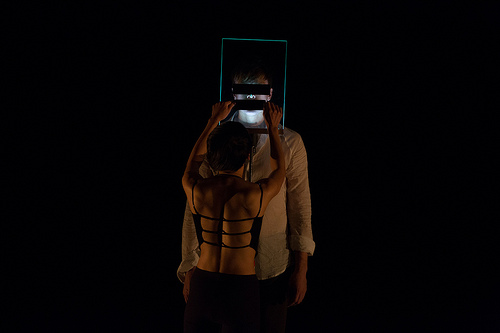
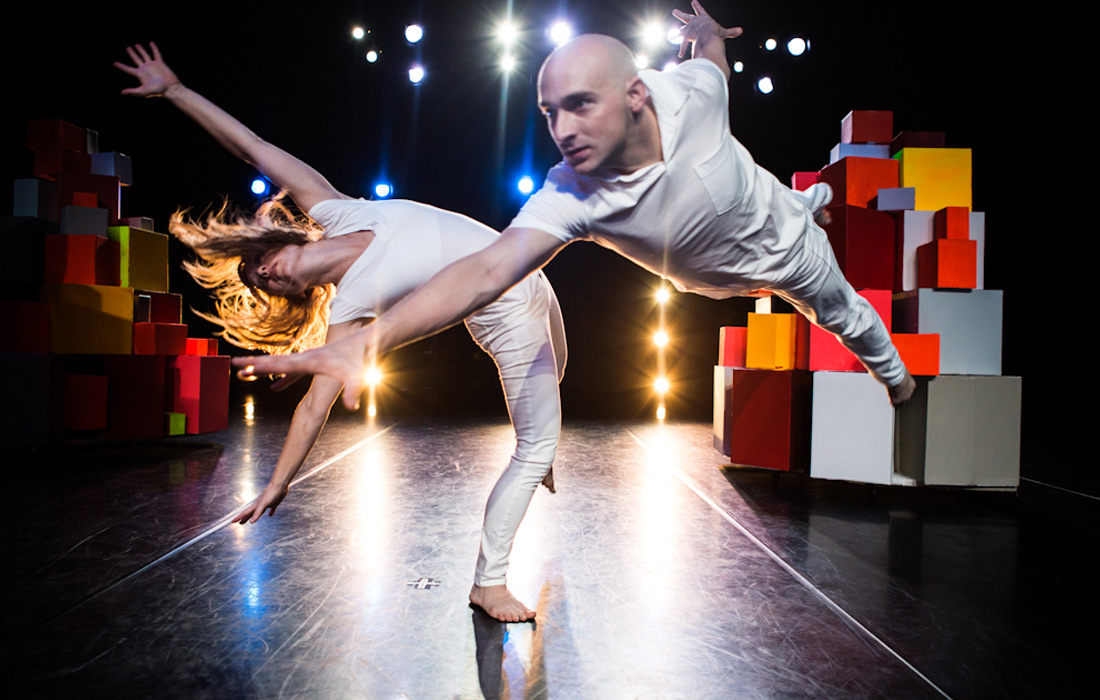
The Seldoms dancers Amanda McAlister and Philip Elson in "Exit Disclaimer". Photo by Brian Kuhlmann.

“I’ve been a curious creature all my life,” Philip Elson told me last week. “Try everything once. That’s my thought process.” Elson, a graduate of Columbia College, dances with The Seldoms and serves as their Technology and Media Coordinator. Along with dancing for other groups and independent artists around Chicago, most recently guesting with Same Planet Different World for the opening of FlySpace Dance Series, he also is an Apple “Genius”, adept at video editing/archiving, sound scoring, filming dance and curating (Red Tape Theatre). Try everything once. It seems he’s good at everything he tries.

A Fort Worth, Texas native, Elson began taking dance and gymnastics at the age of three, eventually dropping the gymnastics to focus on jazz and ballet and perform on the competition/convention circuit, even appearing on Star Search with Arsenio Hall. After three semesters at New York University studying musical theater, he returned to Texas and got his first taste of modern dance at 19. “I kind of fell in love with it,” he said. “One of the things I really love about dancing is the exploration…that pureness, That rawness of just feeling movement. It felt like an opportunity to explore movement that I never felt possible before.”

Elson, 26, met Seldoms artistic director Carrie Hanson when he moved to Chicago in 2008 to study dance at Columbia where she was one of his professors. The first week of school, he went to see The Seldoms performance Convergence, which was set in a 17,000 square foot garage space. He was blown away. Shortly thereafter, he remembers her telling him to “Be on the lookout.” For what? He wasn’t sure until he saw a sign posted for male auditions for The Seldoms and thought, “This is it.” He’s now in his fifth season with the company. “What drew me to her work is twofold. The anatomical nature of it, because of her history with Laban and the way that she’d talk about it as you’re learning it. She was my anatomy teacher at the time and everything was clicking. The body exploration was really athletic. She was able to help me find the ease in my athleticism, a softness in that. It’s still powerful, but not spazzy. It’s really clear.”

Elson admits he made his first solo for himself (to Gloria Estefan’s Turn the Beat Around) at age seven. The interest in creating dances was there, but not the confidence. He felt he was stronger as a dancer, but wanted to learn more about choreography. When Hanson asked her dancers to make in-house works for the upcoming show Mix With Six, he took it as a challenge. “I hate making solos with a passion. I do,” he said. “I find it so much easier when there are relationships and bodies to work with.” So naturally, he decided to create a solo on fellow dancer Cara Sabin that will appear this weekend along with dances from Damon Green, Amanda McAlister, Bruce Ortiz and Javier Marchán-Ramos.

Elson’s Between Means and Ends, a work explores the relationship and space between chaos and stability, began with a introspective and unique process including writing about insecurities, staring in a mirror, and a theory of movement he created in college called “The Exhaustion Theory”. “The way it works is if you totally tax yourself physically and mentally, you have no choice but to move with ease and efficiency,” he said. “You don’t have the energy for all the extra stuff. That was my way to get people to find a certain physicality, but also vulnerability.” Elson and Sabin did a 45-minute boot camp followed by a disorientation exercise taking about an hour and a half before standing still with their hands over their heads for 10 minutes. “It’s hard, but movement, a motif, came out of that. I’ve always thought Cara has such an interesting body. I’m fascinated by the way she moves and her strength, her flow and her longness. I wanted there to be this mesh of my ideas with her interpretation.”

The Seldoms presents Mix With Six at Constellation/Link’s Hall, 3111 N. Western Ave., Friday-Saturday, April 12-13 at 8 pm and Sunday, April 14 at 7 pm. Tickets are $15; call 773.281.0824 or visit mixwithsixlh.eventbrite.com.

Delfos Danza Dazzles

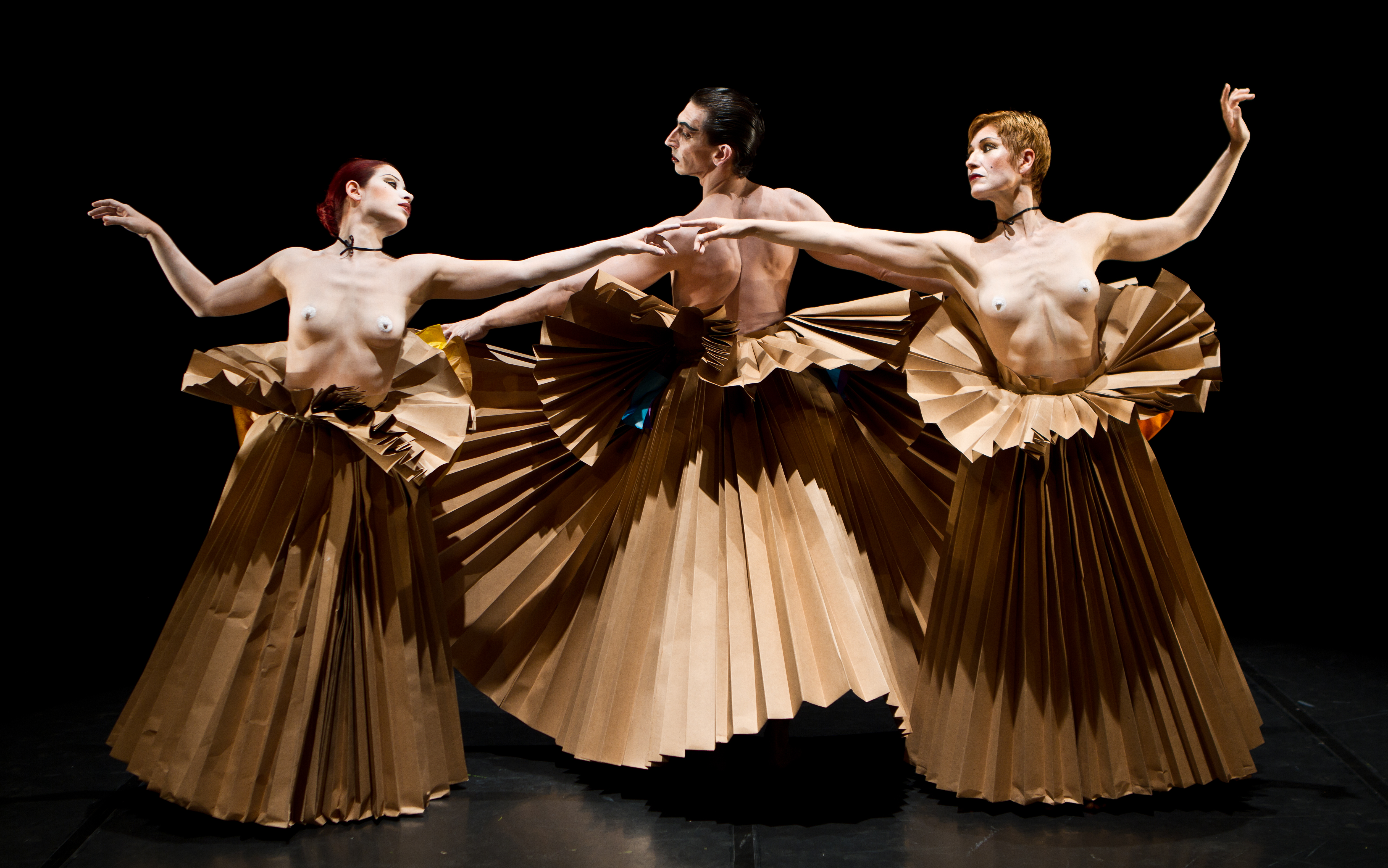
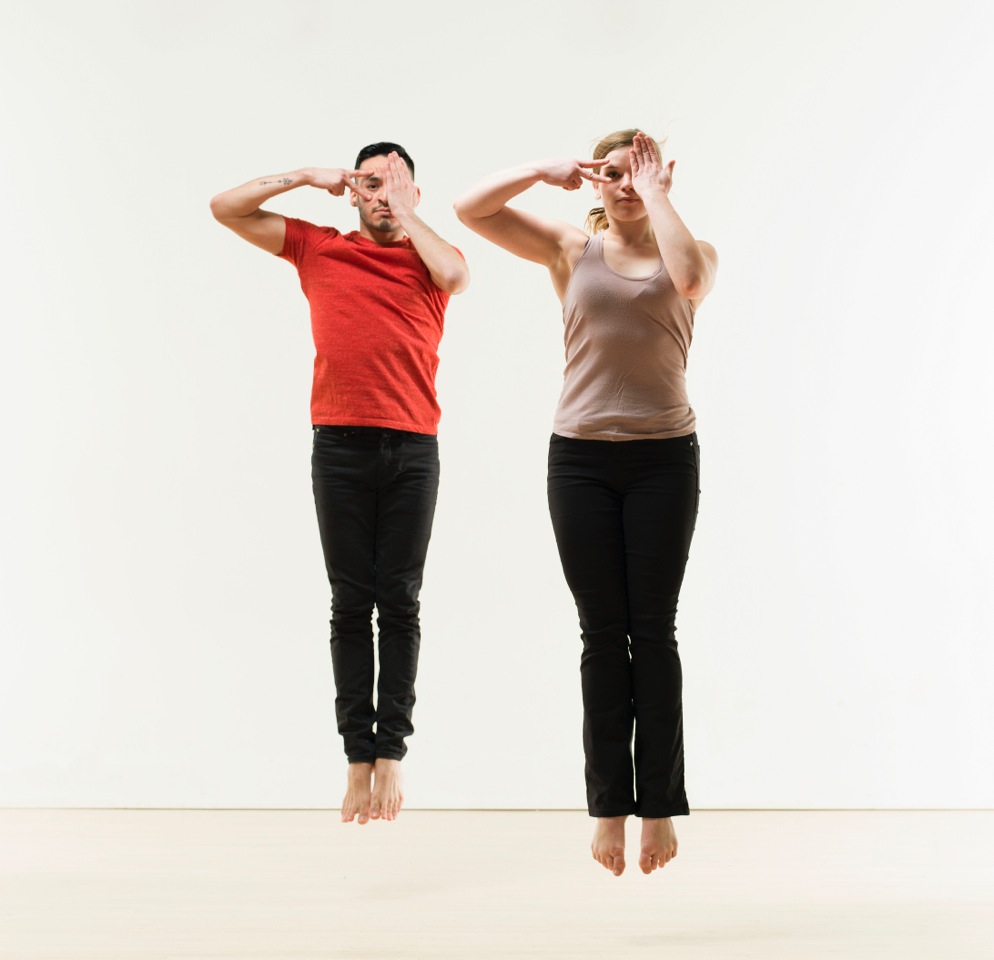
Delfos Danza Contemporanea in "Trio y Cordon". Photo by Carlos Quezada.

Delfos Danza Contemporánea, arguably Mexico’s top contemporary dance company, performs its 20th Anniversary Concert Resonancias (Resonances) to the Dance Center at Columbia College this weekend. From the opening number last night with three topless dancers clad in origami paper skirts, different was the name of the game. The six company dancers were solid and unique. Some of the choreography worked better than others (I prefered the more dance-based pieces to the heavily conceptual), but taken as a whole showing works throughout the 20-year history, the performance provided a nice, smooth ride finishing stronger than it began.

Kudos to Lighting Designer Erin Tinsley* and the tech crew for spot-on incorporation of the intricate lighting design that was indeed innovative, but sometimes distracted from the dancing. Stand outs: Omar Carrum for his choreography and his strong, dramatic, intense solo Juana in which he wore a giagantic black skirt calling up images of Joan of Arc, a Samurai soldier and a 16th century priest. Dancer Surasí Lavalle was exquisite;  her low center of gravity allows her to move faster, further and more efficiently than seemingly possible. Both of these dancers also stood out in the final work Del amor y otras barbaridades (About love and other calamities) as the male-female couple that struggles aggressively and sexually, then reconciles.

Delfos Danza Contemporánea performs at the Dance Center at Columbia College, 1306 S. Michigan Ave. Two shows left: Friday-Saturday, April 5-6 at 8 pm. Tickets are $26-$30; call 312-369-8330 or visit colum.edu/dancecenter.

*Update/correction: The fabulous Lauren Warnecke, who works on the Production Crew, clarifies that the lighting design was by Co-Artistic Director Victor Manuel Ruiz and Stage Managers Austin Shirley and Rigoberto Del Valle. The crew mentioned above works for the Dance Center. Stellar job to all!

Auditorium Theatre 2013-2014 Highlights

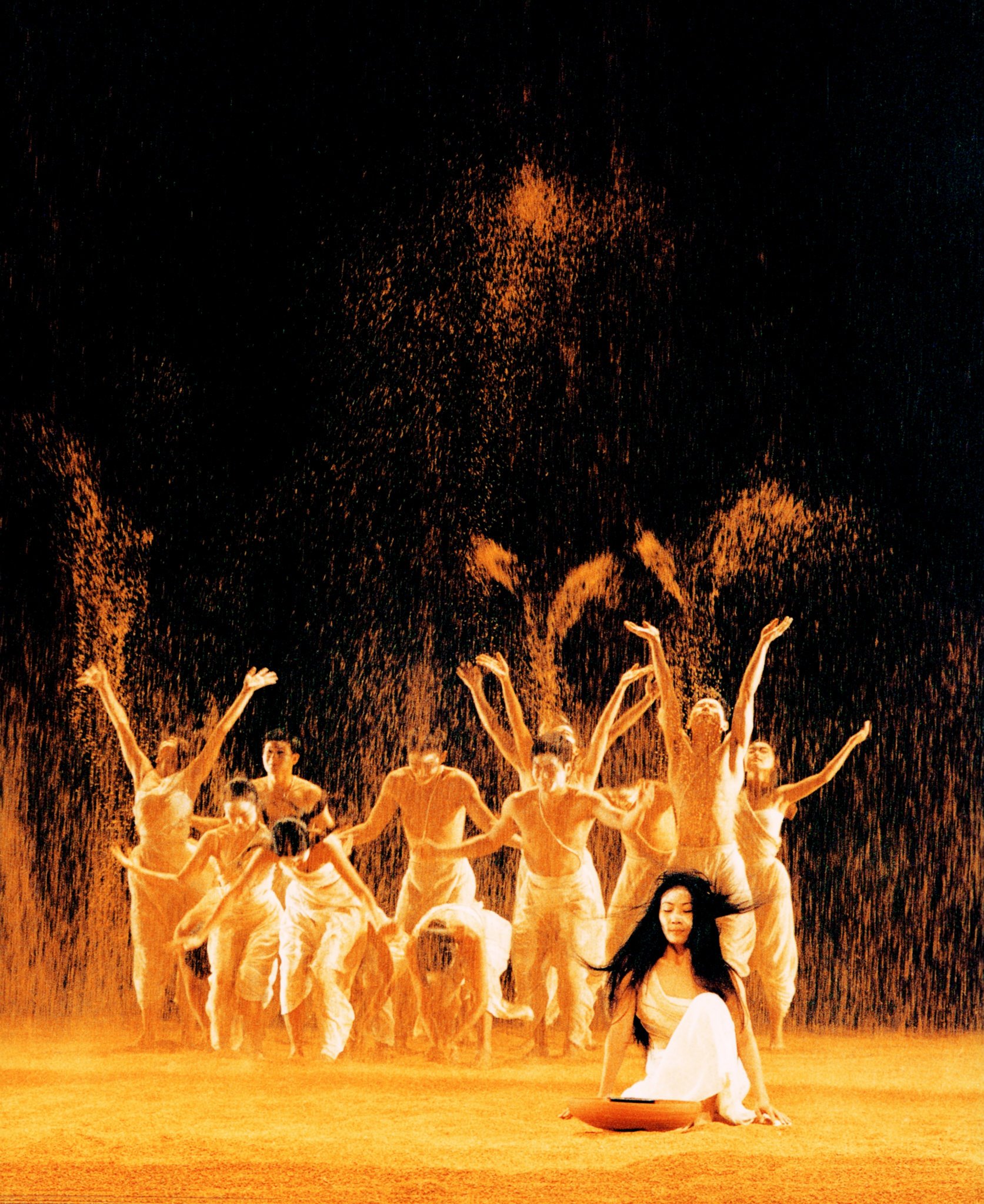
Cloud Gate Dance Theatre in "Songs of the Wanderer". Photo by YU ui-hung.

The Auditorium Theatre of Roosevelt University (ATRU) just announced its 2013-2014 season. Here are a few things I’m excited about:

Ballet West – former Joffrey Ballet dancer Adam Sklute’s company will be presenting Sleeping Beauty (classic, long, but beautiful w/ gorgeous music) and Val Caniparoli’s The Lottery. Caniparoli created Incantations for Joffrey in 2012 and has received great reviews for the premiere of The Lottery which has a unique twist where the audience finds out the “secret” before the dancers (who don’t know who will perform the final solo until it happens live!). Cool beans.

Houston Ballet – In another local connection, Joffrey premiered Artistic Director Stanton Welch’s Son of Chamber Symphony in 2012. His company brings the storybook ballet Aladdin to town in March of 2014.

Alvin Ailey American Dance Theatre – The New York-based company returns for another two-week run featuring a mixed rep and the showstopper Revelations. Yay.

River North Dance Chicago – Local favorite Rivno takes the stage in April 2014 will a new world premiere. Always a good show – expect lots of abs and speedy turns.

Paul Taylor Dance Company – I’m reading Paul Taylor’s new book Facts and Fancies right now, so the timing is perfect! My only regret is never getting to see my friend Julie Tice perform with the company live during her ten years there :(

Cloud Gate Dance Theatre – Co-presented with the Dance Center of Columbia College and the Joffrey Ballet, this troupe from Taiwan always amazes with their imagery and Butoh-esque stamina/control.

Chick Corea and Béla Fleck – Non-dancy, but my brother (a musician) listened to Corea ALL the time when we were growing up and a bazillion years ago I performed a piece with the above mentioned Tice to a Beatles cover by Fleck (and the Flecktones). Good times.

So there you have it. Oh plus, the yearly tradition of the Joffrey’s The Nutcracker and any chance to see ATRU E.D. Brett Batterson and you can see why I’m stoked.

For more information, visit auditoriumtheatre.org.

Dance Center Announces 40th Anniversary Season

Cloud Gate Dance Theatre dancer WANG Wei-ming in "Songs of the Wanderers". Photo by YU Hui-hung.

The Dance Center of Columbia College marks its 40th anniversary season with an exciting range of dance companies from around the world. Along with staple local and international modern companies, the season welcomes a number of hip hop and urban artists to the roster. Nods to the past, present and a look toward an interesting, if changing, future?

Notable touring company Cloud Gate Dance Theatre of Taiwan returns to Chicago next March and will be co-presented with the Joffrey Ballet and the Auditorium Theatre. (*This performance will be at the Auditorium.) A French hip hop choreographer sets work on young dancers from Brazil for an explosive show by Compagnie Kafig performing in February 2014. Other traveling companies include multiple award-winning Bill T. Jones/Arnie Zane Dance Company, Philadelphia-based choreographer Raphael Xavier, as well as New York-based Susan Marshall and Company. A co-commissioned by the Dance Center will feature a work about migration out of Africa through the “lens of Moses stories” by Reggie Wilson/Fist & Heel Performance Group.

Local troupes to hit the South Loop stage include Mordine & Company Dance Theater, Same Planet Different World and Peter Carpenter Performance Project (joint program), and Khecari and The Humans (joint program). Also look for Family Matinee performances throughout the season.

For more information on the 2013-2014 season, visit colum.edu/Dance_Center.

Stephen Petrionio Co’s Underland

Stephen Petronio Company dancers.

Tonight is your last chance to see the Stephen Petronio Company perform Underland at the Dance Center of Columbia College. And see it, you should. Lovely dancing, brave choreography, great music.

Petronio’s 2011 work set to the music of Australian singer/songwriter Nick Cave was originally made for the Sydney Dance Company.  In program notes, Petronio describes Underland “as a ‘place’, a kind of subconscious world ‘beneath the surface’, that locates the heart of Cave’s music”. The 14-section work succeeds in creating a dark, emotional world perfectly matched by Cave’s somber tones especially in ‘The Weeping Song’ and ‘The Ship Song’ sections. Petronio himself makes an appearance opening the piece by slowly crawling down an inclined ladder with a pen in his mouth, measuring time or distance by making marks on his arm. The “Descent” sets the stage for the hour-long world he has created.

Too many costume changes and a lackluster ending are the only downsides to this show. The choreography is smart, tight and interesting with solos, duets, trios and group work meshing so that your eyes and mind never get bored. The wildly off dancing in short tutus and garters in The Carny section deserve special mention. All the dancers were strong, yet distict, allowing their personalities and individual styles show through. Two that stood out were the petite Jaqlin Medlock, fierce technique and stunning attention to detail, and Joshua Green, powerhouse legwork set off with beautiful arms. The technique is what sets this group apart. Solid ballet training sets the base so they could do anything Petronio asks of them. With more experimental works, the technique sometimes gets lost. Not here. Gorgeous extensions (a la-besque?), a torqued jets, deconstructed fouette turns and a perky little parallel brise all make appearances. Slicing arms, a hip or head swirl, a bun askew all lend to the feel of a ballet gone beautifully wild.

Stephen Petronio Company presents Underland at the Dance Center, 1306 S. Michigan Ave. Final performance Saturday, March  at 8 pm. Tickets are $ 30.

Moving Dialogs Series

Moving Dialogs curator Baracka de Soleil. Photo by Jacob Bell.

Diversity seems to be the word on everyone’s lips these days. Shirley Mordine, director of Mordine & Co., spoke about the need to diversify by asking other companies to perform with her company at last week’s performances. Numerous small companies across Chicago are sharing shows with other artists in alternative spaces in increasing frequency. Rumors have the Dance Center of Columbia College looking to diversify their academic programming to include a broader spectrum of styles including African and hip hop. Local dance service organization Audience Architects held several convenings gathering artists opinions and data on diversity of dance in Chicago. And then there is the Chicago Cultural Plan – the big daddy study on arts and diversity in the Windy City.

But it was a conversation with Audience Architects Executive Director Heather Hartley and artist/teacher/consultant Baraka de Soleil that sparked the idea for a new, six-part series called Moving Dialogs: Diversity + Dance. de Soleil said the community convenings came out of the fact that local artists who attended the 2012 Dance/USA conference weren’t satisfied with the conversation about diversity. “We were either trying to be too nice or it was being diluted,” he said. “There are things we didn’t want to talk about. It’s very challenging. Through the genius of Audience Architects, bridging the conversations between audiences and those who construct the work is a wonderful way to begin to make the conversation larger.” The free series opens this Sunday, March 10 with Diversity: Then/Now at the Old Town School of Folk Music.

de Soleil, who grew up on the South Side and has performed as an interdisciplinary artist in Minnesota, San Francisco and New York, will be the curator for the entire series. The inaugural Spring Series will focus on Chicago’s history and the current cultural climate of the local and national dance scene. A panel of artists – Alvin Ailey American Dance Theatre‘s artistic director Robert Battle, Columbia College chair Onye Ozuzu, dance critic Lucia Mauro, dance education director for Old Town School Sarah Dandelles, Cerqua Rivera artistic director Wilfredo Rivera, DanceWorks Chicago artistic director Julie Nakagawa and emerging artists NIC K and Dorian Rhea -  will participate in the discussion, bringing their expertise to the table.

I spoke with de Soleil over the phone last week about Moving Dialogs and the opening series.

How did you decide who would be on the panel?

Timelines, relevance and cultivating relationships. The people who are a part of this opening forum are people I’ve had time to get to know and have conversations and hear where they’re at. This came out of conversations, not necessarily about diversity, but what are the ways we can come together and strategize. The representation of emerging artists is important. They’re beginning to think about ways of diverstiy that are multi-layered. They’re just doing it. They aren’t talking about it. We need to hear these voices and they’ll teach us something. It’s important that the experience is somewhat multi-generational, but that it’s a coalition of the multiple voices, multiple ages and multiple experiences all looking towards discovering this language about how we can think and break open the notion of diversity. It was synergy. It was timing. It was relevance.

What kind of information are you hoping to get and what will you do with that information?

We want to begin to discover, as a community, the best language that supports moving this conversation about diversity along and that it moves us beyond the notion of diversity as a deficit, as something marginalized, as something now that has been relegated to our legacies. We need something to move us out of that place and that there is a co-existence of these diverse thoughts. It’s a big challenge. Above and beyond just representation of having different people in the room is the line their diverse and distinctive bodies to co-exist and to speak from that place of co-existence. You can be there and I can be there. We can both have our opinions, but a new language that allows us to both be there. This first one is an inroads of how we can begin to talk about diversity. It’s not attainable; it’s already there. We’re just beginning to name it and allow it to co-exist and to allow the diverse voices to co-exist in a new way that everyone can share and be their true selves, adding to the conversation. Who is in the room will inform the conversation. I have a legacy and a past that reflects who I am culturally. I’m going to allow myself to be deeply present in this moment and ask others to be deeply present in themselves and that is what is going to inform it. There is this conversation, but there will be iterations that move it and propel it forward, so we won’t be stuck in this conversation.

Read more about Moving Dialogs with a Moving Reflections blog entry by Hubbard Street Communications Manager Zac Whittenburg.

Moving Dialogs Diversity: Then/Now, Sunday, March 10 from 6:30-8 pm at the Old Town School of Folk Music, 4545 N. Lincoln Ave in the Myron R. Szold Music and Dance Hall. Admission is free. RSVP IS REQUIRED.

Fun with Snow Globes (and #sassy pancakes)

The Seldoms. Photo by Brian Kuhlmann.

Leave it to Carrie Hanson – a 2012 Dance Magazine “25 To Watch” -  to get an assist from Mother Nature who brought a 20-degree temperature drop and torrential downpour for opening night of Hanson’s new work about the argument around climate change. The drastic weather change was the perfect prelude to opening night of The SeldomsExit Disclaimer: Science and Fiction Ahead at the Dance Center of Columbia College.

As she did in her 2011 hit STUPORMARKET about the financial crisis, Hanson again incorporates voice overs of lectures and debate points from scientists and politicians to make her points with clarity and humor. (I have to admit hearing Newt Gingrich repeat the line – “I’m an amateur paleontologist” – creeped me out.) The dancers verbally add their own twisted talking points to show the absurdity of the extremes in this debate.

Hanson is lucky to have a small, but tight and strong ensemble of six dancers that have worked with her for a number of years. Philip Elson, Damon Green, Amanda McAlister, Javier Marchan Ramos, Bruce Ortiz and Cara Sabin “get” her and are excellent purveyors of her vision. They are fearless – and they need to be considering some of the death-defying partnering Hanson asks them to perform. In colorful pedestrian clothes, they ran, dove, slid and spun with full abandon. An opening duet in, on and around an old-school elementary desk let the audience know they were in for something abstract and unique. Hanson’s intelligence and playful style was also on full display as she included cigarettes, bananas, chocolate eclairs, garbage, snow globes and recurring references to Malibu Barbie and “big ass lettuce”. A clever turn where the dancers peel each others feet off of the stage with metal spatulas grows into actually cooking and eating gluten-free, organic pancakes on stage! (McAlister got the brunt of the feeding and had to hoard away pancakes squirrel-like in her cheeks to continue dancing.)

Hilarious, fun, dangerous, exciting, thoughtful and well done. The Seldoms, and Hanson,  seem to have another hit on their hands.


Ballet Lab Chicago

Photo by William Frederking.

Are you a ballerina with an edge?  A dancer with classical training, but likes to move more outside of the box?  Dare I say, a rogue ballerina?  Local dancer/teacher/choreographers Emily Stein and Paige Cunningham Caldarella have a workshop designed just for you.  Ballet Lab Chicago is a one-week intensive contemporary ballet workshop being held July 30 – Aug 3 at Visceral Dance Center (2820 N. Elston Ave.).  Two morning technique classes – 10:00 to 11:30 and 11:30 to 1:00 pm/teachers will alternate – give you a warm-up and a solid base for an afternoon rehearsal – 1:00 to 3:00 pm – where both choreographers will “workshop” new choreography.  On the final day, there will be a works- in-progress showing of the resulting dances.  Aside from the full workshop ($300), there are two class options:  a 5-class option (you can choose any five classes – $100), or the entire week of nine classes ($150).

Stein and Cunningham met about five years while teaching at the Dance Center of Columbia College.  Because they both taught the same level and had some of the same students, they started talking about what was going on in the classes and found they had similar approaches.  Columbia’s summer program ends in mid-July and although there are many other companies housing workshops around Chicago, they thought this would be a good time for their students to get some extra classes before school session start up again in the fall.

I sat down with Stein and Cunningham at the Dance Center to find out more about their Ballet Lab.

Why did you create Ballet Lab?  

ES:  We both are interested in choreographing using the ballet vocabulary, which we don’t always have the chance to do here.  It’s also an opportunity for us to get some playtime choreographically that was something more specifically focused on contemporary ballet. There’s a showing on the last day.  I think we’re both hoping that it gives us a chance to springboard into some new work next year, either in terms of choreographic ideas that we develop in that week, or in terms of meeting new dancers or finding people we want to work with in the future.  We’re both interested in approaching the ballet vocabulary in a choreographic way.  I’ve always been teaching ballet, I was classically trained, it’s my first language and my first love, but obviously most of my performing career was in modern dance…very avante garde modern dance.  I’m trying to bring the ends of these things together, because in my brain there are similarities.

Can you explain what you mean by “approaching ballet choreographically”?

ES:   A lot of my work in the last ten years since I did the solo-commissioning project (working with Deborah Hay), kind of sent me on this journey of improvisation and scores.  I’m really interested in structure.  Ballet is full of structure, but it’s not improvisational structure.  It’s the opposite…or is it?  I guess that’s my question.  I’m interested in exploring the vocabulary and playing with ideas of structure and score.  For example, if I create a combination and then I give instructions of what to do with the combination, what will happen to it?  Each dancer will bring something new to it.  How open can that be?  Or how specific does it need to be in order to be a replicatible piece that’s interesting to watch?  Scores are really interesting, but it’s a big risk because sometimes it’s just boring to watch.  It just doesn’t work.  Can you make it work and make it different every time, or not?  A lot of times in improvisation workshops there was “not that”, “not an arabesque”…well, why not?  That’s in my body, that’s part of my language.  If that comes out, why is that wrong?  I don’t mean it to be judgmental.  I’m just questioning these things.  What if you take these really abstract ideas of score, but you approach them intentionally with ballet vocabulary in your body, as your language…allowing yourself to access that.

PC:  I like that.  I feel like that is something that comes up.  I’ve caught myself working with young students saying, “that’s familiar, don’t do that” and then they shut down.  That’s what they know.  How do you let them do that, but find a new, interesting approach to it. 

How are your teaching styles different?

ES:  My class has a classical base, but I approach it from a really somatic point of view.  We spend time in class working on mechanical and somatic principles that they can then use in technique.  They develop efficiency.  They get to know their body better and it’s not just about  being able to do stuff, but about finding pathways to do things effectively.

PC:  My class tends to be more contemporary ballet, like a ballet hybrid.  We’ll do a more traditional barre, but the center work might be phrase work or explore things choreographically, so it isn’t necessarily the traditional ballet class structure.  I feel like I was a dance misfit.  I started ballet when I was 3, so I had a lot of classical training, then I went to Julliard and had a lot of formal, technical training.  I was never going to be in a classical ballet company.  Body-wise and the way I approached ballet class, I knew I wasn’t going to be in a ballet company.  Then I ended up at Cunningham which was perfect, because I could use a lot of my ballet training, but still be a modern dancer.  I never felt like I could fit into a downtown modern dance scene.  I wasn’t weighted in that way, so I was in this weird in-between place, but I love ballet vocabulary.  For me, it’s exploring taking your pelvis off-center or you may go into the floor and come up to find that verticality of ballet.  It’s kind of a mish-mosh approach.  There are probably teachers that would call it “bastardized ballet”.  I think part of it was when I came here I saw so many students struggling with ballet, because we have generous admissions, we have students that are 18 and have never studied ballet before.  I started thinking, how can we approach this so they can see how modern can feed into it, or jazz or African. 

ES:  You said ballet misfit.  That was kind of our point of connection.  We’ve both felt that way.  We have a ballet background, but we don’t fit into that mold as performers.  I feel that for both of us, making connections for the students…trying to make the students understand they don’t live on the ballet planet.  There’s one planet, it’s rewarding, it’s not scary or limiting to be able to be able to do all these other things, to be able to think about movement in all these different ways.  There’s a place where if you approach it a certain way, ballet really is organic. 

PC:  Ballet Misfit Academy!  That’s what the t-shirt should say.

What’s your end goal aside from a successful workshop?

ES:  We’ve been talking for a long time about doing a collaborative show, but we have some extenuating circumstances that are changing the game a little bit. (Caldarella is pregnant.)  Both of us look at it as an opportunity. Any time I get to play and make stuff, it becomes something.  There is no end goal.  Everything is a step to the next thing.  We’d like to do the workshop every summer.

PC:  Maybe finding ways of connecting with other Chicago organizations.  Maybe time it so we have a group of five weeks and make it a larger collaborative intensive.  

Ballet Lab Chicago, July 30 through August 3 at Visceral Dance Center, 2820 N. Elston Ave.  Spots are still available, register here!

You Can Be Part of CDF12

Paul Taylor Dance Company performing at the Chicago Dancing Festival in 2011.

Have you always dreamed of dancing on stage in front of an audience?  How about dancing on an outdoor stage in front of thousands of people while looking out over Millenium Park?  That dream can come true.  This year, the Chicago Dancing Festival (CDF) has commissioned a new work by New York-based choreographer Larry Keigwin set to Maurice Ravel’s famous music Bolero.  The world premiere of Bolero Chicago will feature up to 75 non-dancer participants from the Chicago area alongside the dancers.  NO DANCE EXPERIENCE NECESSARY!  Ashley Browne, a member of Keigwin’s company – Keigwin + Company – will be leading four open casting call/community meetings this weekend to meet potential participants and discuss what will be involved by taking part in this historic performance experience.  At the end of the meeting, there will be a chance to sign up for Bolero Chicago, which will be performed twice during the festival:  Monday, August 20th in the Chicago Dancing program at the Harris Theater for Music and Dance and Saturday, August 25th in the Celebration of Dance program on the Pritzker Pavilion stage in Millenium Park.

People of all ages and abilities are encouraged to participate.  Remember there is no dance experience required.  If you join the cast of Bolero Chicago, there will be a two-week residency with rehearsals that run Monday through Friday evening, August 6th – 11th, as well as dress rehearsals on August 19th and 24th. This is the chance of a lifetime.

Open Casting Call/Community Meetings:

Friday, July 13 at 4:30 pm, the Dance Center of Columbia College, 1306 S. Michigan Ave.

Saturday, July 14 at 11:00 am, National Museum of Mexican Art, 1852 W. 19th St.

Saturday, July 14 at 2:00 pm, PINT, 1547 N. Milwaukee Ave.

Sunday, July 15 at 2:00 pm, Beverly Arts Center, 2407 W. 111th St.

Please email your RSVP for attendance in advance to: info@chicagodancingfestival.com.  This RSVP will enter you for a chance to win 2 VIP tickets to one of CDF12′s performances.

Dances Made To Order: Chicago Edition Premieres TODAY!

Three films from Chicago dance artists premiere online today for the Chicago series of Dances Made To OrderThe Dance Center of Columbia College curated the May round of the film series created by Dances Made To Order co-founders Kingsley Irons and Bryan Koch.  Local artists Kaitlin Fox, Atalee Judy and Nadia Oussenko had about two weeks to create dance films utilizing three concepts (clocks and paint, struggle against biology, repulsion/desire) voted on by members.  Fox’s Origin features one dancer (Gretchen Soechting), covered in what looks like mud, in a black and white setting of shadows and boxes set to New Age music.  Judy’s Wasteland shows off her trademark punk style as she adorns and destroys alarm clocks (is the clock belt a reference to her biological clock?) to Barry Bennett’s frantic drums.  Oussenko’s Dance of the Queer Tide Faeries takes a fun turn with three dancers (Oussenko, Rachel Damon, Christopher Knowlton) clad in primary colored crinolines playing on the lakefront.

You can watch all three films online for $10.  For more information, visit: dancesmadetoorder.com.

Read my preview here.