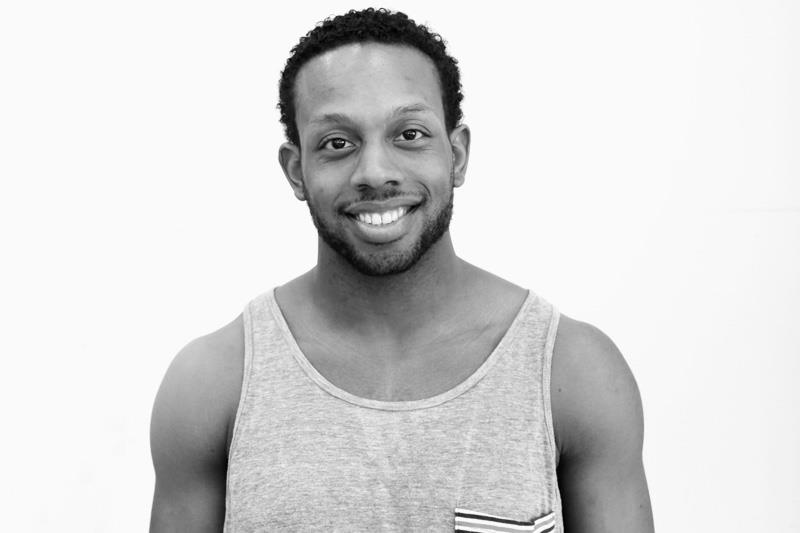
Dancer Spotlight: Nigel Campbell

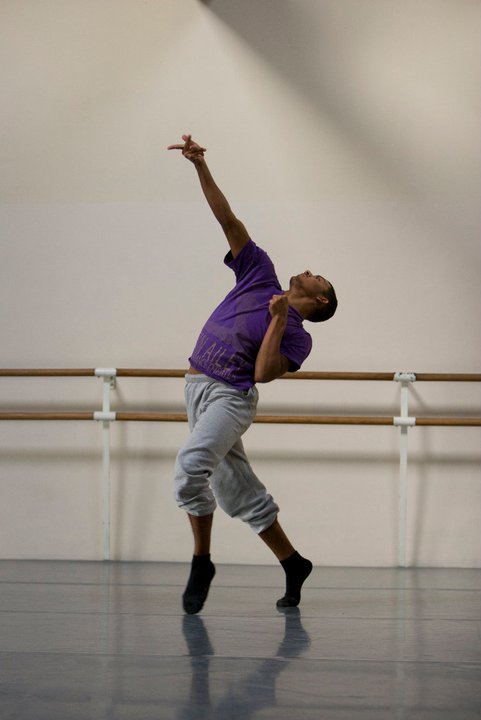
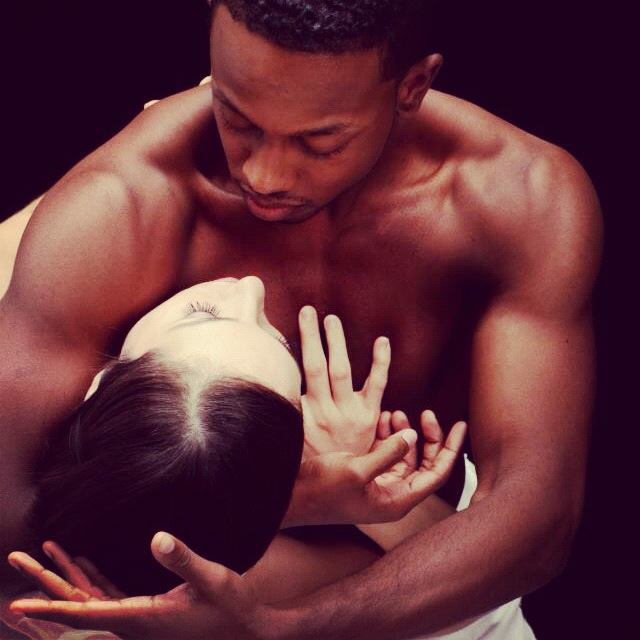
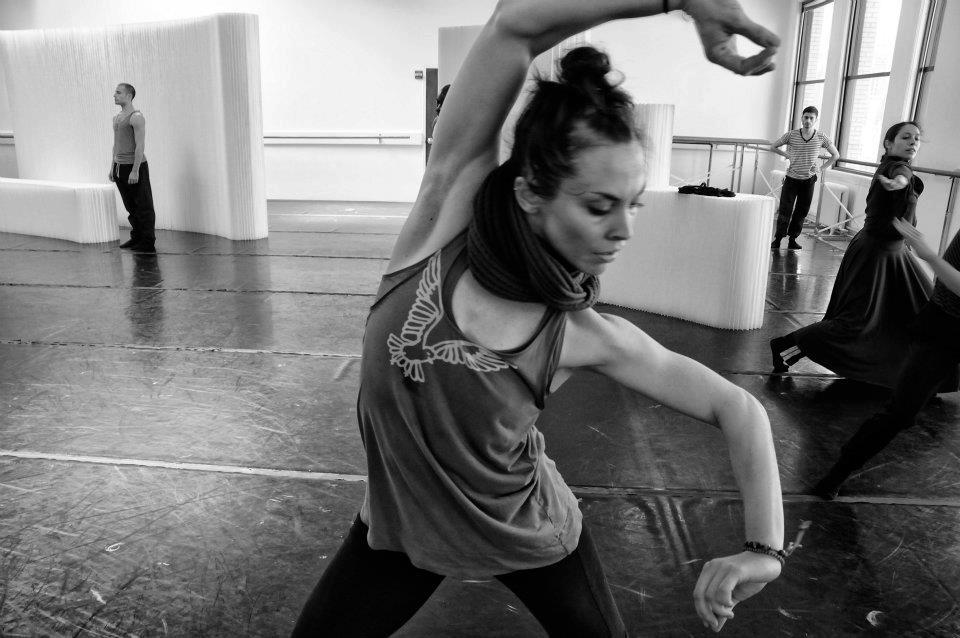
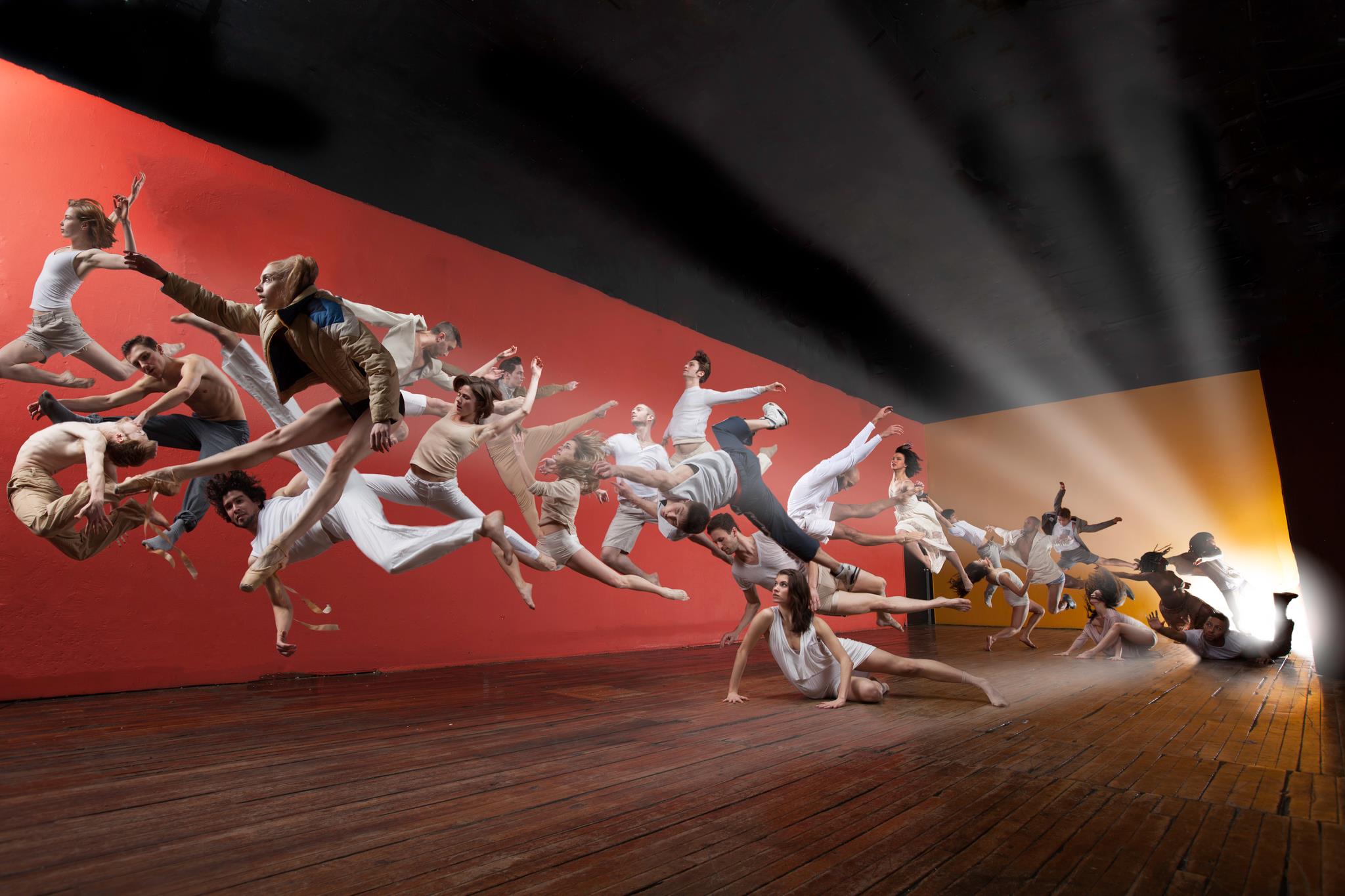
GöteborgsOperans Danskompani dancer Nigel Campbell.

A couple of weeks can make all the difference. Right after a well-received March performance of Luna Negra Dance Theater‘s Made in Spain, dancer Nigel Campbell found himself out of work. The company announced the dancers would be put on an extended hiatus effectively making the current dancers at least temporarily unemployed. Little did we know that Campbell was planning to leave at the end of the season and quickly convinced his new boss, GöteborgsOperans Dankompani Artistic Director Adolphe Binder, to let him join the Swedish contemporary company early. “Initially she told me no, because it was pretty much the end of the season” he said. “She wrote me back two days later and said I could come on as a cover and start learning things for next season. I’ll always be indebted to her.” After a quick pit stop home in New York, Campbell moved to Sweden and just danced in his first performance with the company earlier this month as a replacement for dance/choreographer/rehearsal director Fernando Melo who is on paternity leave (yes, they get that!).

RB spoke with Campbell via Skype on a Sunday evening after he got settle in Sweden. Here are excerpts from our conversation:

Alright, I’m recording this shit. Hi! How are you? What time is it there?

12:30. I had kind of an easy day and I have tomorrow off since they had the show today. I just went to see it. It was absolutely incredible. I’ve only been here two weeks. Everything has happened so fast that I haven’t had time to process it. I’m waiting for the moment to hit me. It’s kind of a blessing.

Why that company? How did you get there?

I was going to join the company next season. It wasn’t official yet and I had just spoken to Gustavo [Ramirez Sansano] about it a few days before everything happened, so I hadn’t made it public yet. I had been aware of the company for quite some time and it has a really good reputation and recently has shifted its focus to very contemporary work and creation and lots of risk taking. Of course at Luna we worked with Fernando [Melo] twice. I had a good rapport and relationship with him. The opportunity presented itself for me to be here and I thought it was a really good opportunity and new information, because it’s really different. It’s an institution. It’s an opera house and there are 40 dancers. It’s completely different from the way I was working at Luna. I was very happy, but I’ve always had this idea for my life where I have lots of different experiences and try on lots of different hats and live in different places. What I’ve always liked about dance is that you get to have so many lives. I’m young and I want to try on lots of different hats. This hat presented itself and it was something I needed to take advantage of. I’m still processing everything. It happened so fast.

How is your body?

Ohhhh. My body is in a bit of shock. I had two weeks to get everything in order to move here. There was a move from Chicago to New York and then New York to Sweden. I didn’t really have time to dance during those two weeks and I was lugging around suitcases and boxes and I’m jet lagged. I jumped into rehearsals here and it’s a very physical piece as well and completely different way of moving from what I’ve been focusing on for the past three years. My body is quite in shock. It hurts, but it’s good. We have physical therapy and massage therapy every day. My body is starting to get used to things. Everything is starting to settle, which is nice.

Talk about Mr. Nigel. Where did you grow up? When did you start dancing?

I’m from the Bronx. I started dancing at a studio in Brooklyn, because my mother’s family is from Brooklyn and we went to church in Brooklyn. This school was affiliated with the church that I went to. I was about 12, which is quite late to start dancing.  They trained me to get into LaGuardia High School for the Performing Arts which is the ‘Fame’ school. The school the movie was based on. That was my introduction to formal training. I was taking ballet every day and the Graham technique. That was when I started to become a bit more serious about my training. I felt like I had a lot of catching up to do, so I really pushed myself. It was dancing all the time and taking four or five classes a day. Also, because I don’t have a natural body for dance. I’m not very flexible. I worked really hard and I graduated from La Guardia and went to Juilliard. That was a very intense experience. I call it the best/worst experience of my life. It’s everything. It’s so full. When people ask, ‘how was it at Juilliard? Was it amazing?’ It was amazing. I cried and I laughed and I met people who are my closest friends in the world. I learned so much, but it’s difficult. They’re pushing you to be incredible. It takes a lot of work and dedication. There are a lot of big fish from small ponds all coming together and you’re all really talented and different. It can be difficult. This is also really beautiful. I went there for four years. It has informed a lot of my choices throughout my life.

And after you graduated?

I graduated in 2008 and moved to Germany. I danced for Marguerite Donlon for two years. That was my first job out of college. Maggie was awesome. I’d lived my entire life in NYC. It’s such a fast pace. I love the energy and fast pace, so when I moved to this small town in Germany, my whole life was flipped upside down in the most amazing way. Everything was new. I didn’t know anyone. I don’t know the culture. I don’t speak the language. I’ve never worked professionally. For the first time, I’m very far away from my family and friends. This was exciting. It was a chance for me to reinvent myself and decide who I was at that moment. At Juilliard, there’s an encouragement to explore Europe. There’s a lot of dancers from the school who are dancing in Europe. I spent all of this time worrying that no one would want me, but taking classes in Europe, I thought I could actually do this. I could be a professional. It was really fresh and new and amazing. Maggie nurtured me and built my confidence. I got to dance a lot when I was there. There were 20 of us. She believed in me. She put me on stage. I grew a lot in those two years. I had to discover my own identity.

What brought you to Chicago?

I heard about Gustavo while I was dancing in Europe. He was already quite famous in Europe. I was on my first summer holiday, my first vacation. I went to visit my friend in Madrid, he was dancing for Nacho Duato. I went to a show. It was a two-billed program. One by Nacho and one by Gustavo. I saw this and immediately fell madly in love with him. I didn’t know him. I didn’t know anything about him. I thought why don’t I know him? This is everything I love about dance and nothing that I hate. I went home to New Yrok and talked to my friend Sarah, who was dancing with Luna Negra under Eduardo Vilaro. She said she thought Gustavo was taking over and in the fall it was announced that he was taking over the company. I didn’t have his email or anything, so I sent him a message on Facebook. I was apprehensive, because it seemed so unorthodox. I told him I’d been following his work and I’d love the opportunity to physicalize his work on my body. I sent him a link to some video clips, but I didn’t expect anything from him. I felt in my spirit that I needed to let him know how I felt. He wrote back quickly. I worked with TitoYaya [Sansano's Project in Spain] for a week. It was really difficult. After the audition in Chicago in April I was 100% down with him and ready to be a part. I finished the season in Germany and moved to Chicago to dance for Gustavo at Luna Negra. He delivered everything that I ever dreamed and expected and wanted him to deliver. He pushed me further that I thought anyone could push me. He demanded a lot of me. It was difficult and frustrating at times. It was scary. It was a different system. I’d never worked professionally in the States. I didn’t understand the complicated health care system. I didn’t understand the lay off system. There was a thing about the way he was working and creating and about his work that felt very much a part of who I am. It was difficult. Gustavo’s body can do these crazy things. My body can’t do that. It was a struggle to get inside of the work in my body. He gave us the freedom to discover his work in your own body. I connected to his physicality, to his musicality, his speed. Some of the actual physical things I had to figure out. There was an intellectual process behind it as well.  In looking at his work, there’s something so architectural. It’s so structural and everything fits together.  He sees it in his head. You can see it working in his head. I was 23 when I started with him. To work with someone that I really believed in and considered a genius…he opened me. He never allowed me to excuse myself. He would say, ‘I’m not going to let you say that you can’t do it. You have to figure it out. I believe that you are talented and intelligent enough to find out how to make it work.’ It was harsh, but always with a cushion of love and support. In that way, he pushed me further than anyone else ever has.

Is there anything you’d like to say “one the record” about what happened at Luna?

It was rough. I don’t think anyone planned it or wanted it to happen. It wasn’t a great situation for anyone. I don’t have any ill will toward the company. I wish Luna Negra all the best in the future. What I take from it is three years of really incredible work and really incredible people. I think we created something special.  I’m honored that I got to be part of something so special. I stand behind Gustavo 100%. I believe in his work and his vision and his artistic direction. That is always where my loyalty and where my conviction has been. I feel that my relationship with him is stronger and I’m thankful that he’s been so supportive of me and that he’s been so understanding. He’s been in my corner this entire time. I will always be part of the Luna Negra family and it will always be a part of my life. I really do wish them the best. I stand by Gustavo. It was time for me to move on and make a change. That was my personal decision. I think I’m a very positive person. I always try to look on the bright side of things. We all falter sometimes and our emotions get the best of us. After some time to think, I’m such a better person, a better dancer, a better artist three years later after having my experience in Chicago with Luna Negra. I’m really grateful for that. My love and loyalty and devotion is with Gustavo. I think he’s brilliant,. I think he’s the voice of a generation. He has the talent and intelligence to move the art form forward. I’m grateful that I got to have that experience. I’m really blessed. All I can do is be thankful for my life.




Breaking News: Luna Negra Ceasing Operations

Luna Negra Dance Theater just announced it is ceasing operations due to financial constraints – effective immediately – until further notice. As you know, the company has been in turmoil for the past couple of months with laying off dancers and the exit of Artistic Director Gustavo Ramiraz Sansano, but this is the worst possible outcome. Very sad news.

Here’s a statement by Board President Jorge Solis from the press release:

“Luna Negra is very proud of having provided a wonderful medium in which to celebrate and showcase Latino inspired dance in the city of Chicago.  Sharing the rich Latino culture has been a source of pride and inspiration to all those involved with the company over the last 14 years. It’s been tremendously difficult to come to the conclusion to cease operations, but the financial reality could not be avoided any longer,” said Jorge Solis, Board President for Luna Negra Dance Theater.

MIA & Update

Howdy! Sorry I’ve been M.I.A. on the blog the last week or so. I’m taking a brief, but much needed break from our crazy dance scene – honestly, Joffrey‘s Othello wore me out! – for a couple of days, but working behind-the-scenes on some upcoming stuff.

Things to look for soon: notes on the Music + Movement Festival Showcase, a review of Eifman Ballet‘s Rodin (both at Auditorium Theatre next week), part two of my interview with Hubbard Street dancer Kevin Shannon about his DanceMotion USA trip, a preview/ Q&A with flamenco dancer Chiara Mangiameli about her studio’s upcoming performance of Quejíos – Cries In The Air, a chat with former Luna Negra-turned-GöteborgsOperans Dansekompani dancer Nigel Campbell! I’m sure there’s more, but I can’t think of what they are right now, so they will be a surprise.

Kisses!


Breaking News: Luna Negra Dance Theater

Gustavo Ramíraz Sansano. Photo by Jonathan Mackoff.

As of today, Gustavo Ramírez Sansano is stepping down as Artistic Director of Luna Negra Dance Theater. He will still remain involved with the company artistically. In May, the board will begin an international search to replace him as Artistic Director.

A sad start to the week. His childlike spirit and artistic vision will be greatly missed. Kisses and kudos. Here’s some of the fantastic work created during his time in Chicago with Luna.

Breaking News: Luna Negra Announces Extended Hiatus

Luna Negra's Monica Cervantes. Photo by Cheryl Mann.

After a successful show last Satuday night, Luna Negra Dance Theater announced it will be on an extended hiatus, but is working toward building a sustainable future. Here’s to a speedy resolution and best wishes to the artistic staff and dancers. Don’t go anywhere…Chicago loves you!

Here is the official statement from the company:

“Luna Negra Dance Theater recently brought on a new Executive Director who has worked closely with the Board of Directors and staff to assess the company’s artistic and administrative operations. To ensure the long-term health of the dancers (several of whom are currently out on injury) and allow for sound fiscal growth in the company’s 2013-2014, 15th anniversary season beginning in the fall, Luna Negra has extended the dancers’ already scheduled hiatus and has reduced hours for administrative staff. The Board of Directors and key staff will continue to conduct day-to-day operations and assure the continued artistic and programmatic success of Luna Negra Dance Theater.”

Luna Negra’s Made in Spain

Luna Negra's Kirsten Shelton & Filipa Peraltinha. Photo by Cheryl Mann.

Split-second shifts and fluid technique ride on thoughtful, thought-provoking choreography set on articulate, authentic artists. Made in Spain, the latest and greatest from Luna Negra Dance Theater (LNDT), performed last Saturday night at the Harris Theater, once again proved the company’s stellar reputation for presenting electric, entertaining and enthralling works. Under the direction of Gustavo Ramírez Sansano, this small group of dancers is thriving and continues to push the boundaries of local contemporary dance. I fear I sound like a broken record, but if you haven’t seen LNDT lately, you MUST go see this group dance!

In the opening piece, Fernando Hernando Magadan’s 2009 Naked Ape, the elastically eloquent Eduardo Zûñiga manipulated the dancers’ actions manually and sometimes verbally through a made up language. “Gibberish, but with a specific idea in the head,” Zuñiga told me. Starched white clothing-like set pieces dotted the stage, one installed with a live mic that when touched by Zuñiga sent the dancers into spasmodic improvisations. Strong performances by all (Zuñiga, Nigel Campbell, Mónica Cervantes, Kirsten Shelton and the continually-impressive Christopher Bordenave) solidify this work as a staple in their rep.

A world premiere by Cervantes, Presente, set to Max Richter’s “recomposed” version of Vivaldi’s Four Seasons delightfully muses on what it means to be present, not stuck in the past or focusing on the future. Fast-moving backward sequences and stunning solo-work by Shelton fly by as little black balls fall out of a hanging abstract white hourglass. The dancers move in and around the balls, even making a separate pile, perhaps trying to save or stop time. Cervantes’ prowess as an aggressive, powerful dancer is matched by her choreographic curiosity and detailed dancemaking.

A new work for LNDT by Magadan closed the show with live, on-stage music from the fantastic Turtle Island Quartet. A chandelier of music sheets and Labanotation notes hanging above the string group, with more crumbled under their feet created a beautiful backdrop for the dancing in Royal Road. The ensemble of dancers again show technical brilliance blending with the musicians in a wonderful riff on the relationship of music and dance. Special mention goes to newcomer Filipa Peraltinha, an outstanding to the LNDT family.

HS2′s Taryn Kaschock Russell: The Exit Interview

Hubbard Street 2 Director Taryn Kaschock Russell. Photo by Cheryl Mann.

On January 17th, Hubbard Street 2′s Artistic Director Taryn Kaschock Russell, rocked the Chicago dance world with this Facebook post: “After 17 amazing years in Chicago…I will be moving back to the east coast…”. You may think I’m being hyperbolic, but this petite powerhouse made a huge impact on the local dance scene. She will be missed. The impetus of the move comes via her husband Greg, who was recently named the new Company Manager for the New York City Ballet. “He started out at SAB (The School of American Ballet),” Kaschock Russell tells me over the phone from her West Loop HSDC office. “To be back managing the building that he learned in, some parts seem full circle.” The couple met while dancing with the Joffrey Ballet soon after the company made the transition to Chicago from New York in 1995.

Kaschock Russell grew up on the East Coast. She graduated high school early and planned on joining Boston Ballet II, but ended up at the Joffrey School in New York right before they declared bankruptcy – “It was a really amusing situation.” – and spent a year in NYC with her brother (dancing with David Parsons) and sister (on scholarship at Ailey). During her seven years at Joffrey, she made quite a name for herself in principal roles including the “Cowgirl” in Agnes de Mille’s Rodeo and as the first female outside of David Parson’s company to perform his six-minute, jump-laden solo Caught. In 2002, she joined Hubbard Street and was soon recognized as a “25 To Watch” in 2003 by Dance Magazine. After retiring from the stage, she began teaching and setting works for Hubbard St as part of the artistic staff – had a baby! – and in 2008, took over as director of the second company, HS2.

RB spoke with Kaschock Russell earlier this month about her career, leaving Chicago at the end of April and what’s next. Here are excerpts of our conversation:

First of all, I’m very sad, but happy for you too.

I know. It’s the same type of emotions I’m having too.

I know you from your Joffrey days. Let’s talk about Caught. Did your brother dancing for David Parsons have anything to do with you getting the part?

Yes and no. David knew me beforehand. I used to sit there and watch when it was only David doing the role. I remember sitting at City Center in the front wing when I was 15, watching David. I’m very proud of this story. I never went in and asked for anything, I didn’t believe in that. I believed in hard work and that should be acknowledged. But when I found great out that David was coming and that they were doing “Caught” that it was one of those opportunities in a career.  So I said, I’m going to get my shit together and I’m going to go in during my lay off and I’m going to tell Mr. Arpino that I just want to learn it. I want to be in the room. I know that women can’t do it, but I want to be in the room and learn it. I walked in and they had the schedule up during lay off, before I went to talk to him, and there were three names on the list to learn it. It was Davis Robertson, Harris Jones and me. I never said anything! He just put me in there.

I have to say, seeing you do that solo was one of the coolest things I’ve seen in Chicago dancing. It was so awesome to see a girl do it. How hard was it? It was all jumps! 

Thank you. It kicked my ass. Basically you have to keep jumping because you don’t know the timing of how the strobe works. It was a ton of trial and error. It is all jumping. After the first or second day, I’d blown out my quads. I had no idea what that was. I couldn’t walk up stairs. My legs kept giving out and then I’d have to go to rehearsal and they were like three-hour-a-day rehearsals. We would do it over and over again. I remember very vividly, he (David) pulled me aside after having me do something like ten more times than the guys did it and he said, “You just bought yourself a matinee missy, if this company will let me put a woman on”. It was really hard. First of all, it took a while to even have the stamina to do it. Still when I was in the wings before I went on, I would feel almost physically sick, because I knew how tired I would be at the end. At the same time, the audience experience is unreal. It’s like a rock performance. I knew that from watching him, but when you feel that and you’re on the stage and the whole audience freaks out that certainly ups the adrenaline. There’s that perseverance of I’m going to get through this.

You came to Hubbard Street in 2002. What made you switch?

I can’t believe I haven’t told you this story. One of the things I loved and was fortunate enough to grow up with was original creations, original choreography. At Joffrey, I got to do that a small amount, but it wasn’t happening quite as often. I had been watching Hubbard Street for years. We always traded tickets. The first inkling when I considered Hubbard Street was after I had just seen NDT’s (Nederlands Dans Theatre) performance of “Petite Mort” on an arts channel. It was the very first piece of choreography on television that made me cry. It was so beautiful and so unexpected and musical. I swear within a week of me seeing it, we got a newsletter at Joffrey saying that Hubbard Street had acquired “Petite Mort”! I remember freaking out. I went to see it and it was right after they’d learned it, so I think the company was still settling in to that kind of partnering, so the experience of watching it from the third balcony at the Shubert didn’t match how I felt watching NDT do it. I thought,ok, I’m still where I’m supposed to be right now. I was kind of getting a bug where I wanted to do more contemporary work, but I wasn’t there yet. Then I had a life-changing experience at Joffrey dancing “Appalachian Spring”. Yuriko Kikuchi came in to set it. The entire experience for me changed a lot of how I was viewing performance or what I get out when I’m learning. She was so giving. She’s very demanding, but so rich with information and not any part of that information felt selfish. She just wanted it to be ours and to watch it grow. It really was profound, the entire exchange and getting to dance that role and working with her. By the time I got to the stage, all I wanted to do was live in it and perform it in that way. I don’t think I’d experienced anything to that point. The process of learning it and putting it on stage was perfect in so many ways. At the same time, I was at a party with Cheryl Mann. She was going through the exact same kind of profound experience (at Hubbard Street). She said, “There’s this man, Ohad Naharin.” She started to describing the initial time he was there for “Minus 16″.  The improvisation, pushing them outside their envelopes, telling stories, how he was using their vocals and everything that went into mounting that first “Minus 16″. So she and I made a pact. She was going to come see “Appalachian Spring” and I would go to see “Minus 16″. They had done “Petite Mort” in that program and then the last thing was “Minus 16″. That time “Petite Mort” floored me. I was in tears. The way they were dancing together was seamless. And “Minus 16″ sealed everything. I think I looked at Patrick Simonello, who was with me, and said, “What am I doing with my life? And why am I not doing this?” It changed everything. I certainly had never thought of staying in Chicago. When you change companies, you normally move cities. I thought I’d go to Europe, or San Francisco or another ballet company. That performance just did it. That’s what I want to do with my life. I wanted to do the work, which made a huge difference and why I’m still here.

HS2 ladies: Emilie Leriche, Alicia Delgadillo, Taryn Kaschock Russell, Felicia McBride and Lissa Smith. Photo by Todd Rosenberg.

Tell me about the transition from dancing to artistic staff.

One of the reasons I stopped dancing specifically is that we were touring so much and I wanted to have a family and that wasn’t working out. It just wasn’t happening. I stopped dancing in December and within a month, Jim (Vincent) asked me to come back to set a piece. Julie (Nakagawa) and Andreas (Böttcher) had just resigned, so there was an interim year where HS2 had a rehearsal director and trying to figure out what to do. I set one piece on second company and shortly after they named me rehearsal director. It wasn’t a full-time contract. I didn’t go on tour, but when the company was here, I was here. Two months after I stopped dancing, I got pregnant. So I was rehearsal director and going back to school (studying Psychology at Northwestern) and pregnant. I really was crazy. I was responsible for remounting works from scratch. I started teaching class for the company. The transition was really smooth. Right after I had Donovan, they had a conversation with me about working with the second company. Basically, from the second I started working with the second company, it was history, because I just fell so in love. I came in the first day. My first group was with Jacqueline (Burnett, Hubbard St.) and Eduardo (Zuniga, Luna Negra) and Ethan (Kirchbaum, River North) How could you not fall in love with them? They were so hungry for information. I started giving corrections on a piece I already knew and the amount that it impacted them within 24 hours was so profound that I was floored. It was two things. It was exhilarating and beautiful and it was scary as hell. They will take what I say and it will mean this much to them. It will make an impact in their lives. The responsibility of it was overwhelming. It was the same way with becoming a new parent. The opportunity to impact lives in that way and help produce change that was meaningful for them. And to just give, in the same way, strangely enough, that I feel Yuriko had given to me. The way she gave to me made me want to give the same way to other people.

What is your teaching/mentoring philosophy?

I’m a little bit crazy. I’m not kidding. I make a fool out of myself every single day, multiple times a day. I’m so not self-conscious about who I am that they feel more comfortable being who they are and I make sure that can happen. I really, truly believe that HS2 needs to be a safe environment for exploration. I give this lecture every single year. You walk into that room and you are there to support each other. You support each others’ failures and successes. You root for everyone to succeed. Not everywhere is like that. I feel that the second company’s experience needs to be a place where they can try and fail in order to get to where they’re going to get to next. You have to fail. You have to fail in big ways and small ways and be able to try things that are ridiculous. The room is a safe room. I really look at everyone individually and try to develop groups that will work to feed off each other’s strengths and weaknesses. I would never want a group of individuals that is very similar, because there’s not enough diversity in the room to add. Everyone comes in with their own experiences and it adds to how everyone grows. They see each other change and I think it helps them. Nobody should want to leave two years later as the same person. They want to be transformed. My directing is trial and error. I’m trying things out. If it doesn’t work, I try other things. I don’t walk in with the answers. I walk in with every bit of information that I have and I give them everything that I have. Even if it’s “I don’t know”. I’m very honest. I try to be extremely honest about what their strengths and weaknesses are even when it’s hard. There are always difficult moments. It takes a lot of confidence on my own part to sit down and know that I’m not going to make someone hate me by saying something difficult. That’s growing up on my part. Laughter. Laughter is enormous. It’s allowing emotion to be shown. Our pieces are set up that they’re theatrical. They’re contemporary internal. They’re always asking for “you” to be in there. Your personality has to be in there. Especially for 18 to 25-year-olds, that can be super uncomfortable. Allowing the time to be ridiculous and silly in that safe atmosphere. You need to be somewhere where you aren’t judged for trying.

What advice would you give to the next director of HS2? 

Allow yourself to be changed. Observe and learn from the people you’re directing. People learn from example. I love the education outreach we do. I believe in it so wholeheartedly. My love for those things goes to my dancers. My willingness to think outside the box in situations and create site-specific improves so they look the best. As I open my mind to things, their minds are open as well, because they see the person in front of the room be excited and inspired. Also, believing the dancers are really special. They are special and they are worth serious investment. Each group of them will change. Adapt to your companies and leading them with strong examples without fear. If you’re asking them to give all of that to you and to create a safe environment, then you have to do it too. You have to lead by example.

What’s in your future in New York?

One of the things I’d like to do is stop touring. He’ll be touring some, so I want to take the opportunity to be the one not leaving. I’ve been fortunate to be able to have worked with a lot of choreographers and NYC isn’t a small dance town. I’ve developed some friendships. I’ve put out some feelers at university programs. That age group fascinates me because they want to learn. But I would be lying if I didn’t say some of the companies there would be interesting to work with. I’m not going towards one thing there. I’m looking forward to spending a little time and teaching in different places and figuring out what might make the most sense. I’m pretty non-committal. My first priority is getting settled and finding where we want Donovan to be in Kindergarten.


Chicago Dance 2012 Highlights

Alvin Ailey American Dance Theatre dancers in "Revelations". Photo by Christopher Duggan.

Nothing says end-of-the-year-review time quite like the last day of the year…am I right? My proficiency in procrastination aside, now is the time to reflect on the past year and look forward to new, exiting surprises in the next. Here’s my Dancin’ Feats year-end review for Windy City Times that came out last week noting 12 memorable performances/performers of 2012, but I wanted to add a few more things.

Looking back at my notes and programs from the year (yes, they are all in a pile, I mean filing system, in the corner of my bedroom) I am so thankful for all the wonderful dance I get to see. Narrowing it down to 12 “top whatevers” was not an easy task for there were too many people and performances to name. Here are some other performances that are still in my thoughts:

Alvin Ailey Dance Theater in Ohad Naharin’s Minus 16. Although Revelations is still amazing, seeing this company in more contemporary work was refreshing. And the audiences at Ailey performances are a show unto themselves.

Paris Opera Ballet and American Ballet Theatre‘s performances of Giselle were stellar for their star-studded casts on opening night, but ABT’s Sunday matinee with real-life couple Yuriko Kajiya and Jared Matthews stole my heart.

Luna Negra Dance Theater founder Eduardo Vilaro brought Ballet Hispanico to town with former Chicago dancers (Jamal Callender, Jessica  Wyatt and Vanessa Valecillos) back for a rep show at the Dance Center to much acclaim, while current director Gustavo Ramirez Sansano continues to take the company in new and fascinating directions.

The Seldoms, in their tenth year, deconstructed the Harris Theater and traipsed around the world to collaborate with WC Dance in Tapei, while tackling the ongoing arguments around climate change with artistic director Carrie Hanson’s trademark wit and intelligence.

Before Hubbard Street Dance Chicago turned 35 this fall, it said goodbye to retiring, beloved dancer Robyn Mineko Williams. Artistic Director Glenn Edgerton completed his goal of presenting all five master European choreographers in the rep with the acquisition of Mats Ek’s Casi-Casa. Ek’s work took the company to a new level, but I’m still haunted by their dancing in William Forsythe’s Quintett from the summer series.

The Joffrey Ballet performed Forsythe’s In the Middle, Somewhat Elevated in their regular season and at the Chicago Dancing Festival. I was proud to be an official CDF blogger for the second year in a row. New to the fest this year was Giordano Dance Chicago, now celebrating 50 years. And Muntu Dance Theatre of Chicago hit 40!

River North Dance Chicago dancer Ahmad Simmons deserves a mention for his work in Ashley Roland’s Beat, particularly his performance on the Pritzker Pavillion stage in Millenium Park.

Special thanks to Catherine Tully of 4dancers.org for her continuous and generous encouragement and insight. Thanks lady!

Dance writing-wise, I’m thankful for the opportunity to write for Front Desk Chicago, Windy City Times, 4dancers and Dance Magazine.

I could go on (and on…), but tomorrow is a new year and I look forward to seeing more incredible dancing and dancers in our most awesome city. Happy New Year!


Luna Negra: A New Adventure for Moniquilla

Lunatics Kirsten Shelton, Mónica Cervantes & Eduardo Zuñiga. Photo by Jonathan Mackoff.

The irrepressible, glass-wearing, fierce friend Moniquilla is back with her friends Matias and Veronica for another magically crazy adventure in the second year of the Luna Niños Family Series presented by Luna Negra Dance Theater. Last year had the trio up against the evil Nico, but with a little help from the audience and a lot of laughter, he turned into one of the good guys. This year Moniquilla enlists his help to find a missing Matias in Moniquilla and the Moon Monster.

The original Moniquilla story (Moniquilla and the Thief of Laughter) was the brainchild of Luna Negra Artistic Director Gustavo Ramírez Sansano for Titoyaya Dance Project in 2008. This year’s installment is written, directed and choreographed by company member Eduardo Zuñiga. He also created the soundscape and set design working with illustrator Patricia Marín Escutia and lighting designer Jared B. Moore. With a running time of an hour, this is the first full-length production with Zuñiga at the helm. Sansano liked the work Zuñiga made for the company’s in-house choreography showcase last at the MCA, Luna Neuva, as well as his work for DanceWorks Chicago‘s Dance Chance and wanted to give him a shot at developing the Moniquilla storyline. “We used to joke in Spain that the next one would be in space,” said Sansano. “I didn’t know how to do it, but Eduardo figured it out.”

Zuñiga, 27, is up for the challenge. He’s a natural running rehearsals at their State Street studio and flashes a mischievous grin when talking about the show. He won’t give away all the secrets – there is, of course, a surprise plot twist! – but will divulge the action revolves around an alien and The Book of Magic. Injuries to company dancers may force him to jump in and perform, but for now, he’s enjoying working with his peers on this contemporary, family-friendly tale of magic, friendship and fun.

Illustration by Patricia Marín Escutia.

Luna Negra Dance Theater presents Moniquilla and the Moon Monster at the Ruth Page Center, 1016 N. Dearborn, Friday, Nov. 30 at 7 pm and Saturday-Sunday, Nov. 1-2 at 3 pm.

Tickets are $15; visit www.lunanegra.org or call 312.337.6882.


Luna Negra’s “Reunion”

Luna Negra dancer Eduardo Zuniga in Fernando Melo's "Bate". Photo courtesy of The DeBartolo Performing Arts Center.

In honor of Hispanic Heritage Month, this Saturday, October 13, Luna Negra Dance Theater brings a three-work program to the Harris Theater. The shows title, Reencuentros, or “reunions”, is just that on several levels. A revisiting of Fernando Melo’s 2005 work Bate, which the company performed in 2010; a reuniting of Melo with the Luna dancers for collaboration; and a return to choreographic roots for Artistic Director Gustavo Ramírez Sansano. His new work 18 + 1 anchors the performance between Melo’s earlier Bate and a current collaboration with the company. “Last year was the 18th year of my work, since I started putting things on the stage,” Sansano says. “Last year wasn’t the right moment, so the ‘plus one’. I wanted to make a point with 18, because that’s when you’re a grown up.”

Also growing up is Luna Negra, the company. This season, ten contracted dancers, plus nine apprentices are on the roster, creating a strong foundation to expand and explore. Unfortunately for audiences, veteran Luna performer Veronica Guadalupe will dance her final show with the company on Saturday, although she will still act as rehearsal director. Sansano has been planning this show for a while. “When I talked to Fernando to do Bate (in 2010), that was an introduction of his work to get to the point we are at now,” he says from the Ballet Chicago studios on State Street. “That was the first meeting, now is the re-encounter.”

The Brazilian-born Melo, is currently a dancer, choreographer and rehearsal director at GöteborgsOperans Danskompani in Sweden, while also traveling the world setting his works – a job, he admits, leaves little time for sleep. “Life gets a little busy sometimes,” he says. “I work every day until 6:00 p.m., then my other job starts. I’m a night person, so I get a lot done in the evenings.” Melo took six weeks off to come to Chicago and work with Luna Negra (he’d been here for five when I spoke with him earlier this week). His assistant/repétiteur Stephan Laks and set/costume designer Markus Pysal came with him to aid in resetting Bate and creating Walk-In. The world premiere is finished aside from last minute tweaking. “With a collaboration like this, it’s not ready when you can’t put things in anymore, it’s ready when you can’t take anything else out.”

The title Walk-In, also has multiple meanings: a walk-in closet (“the dancers have to walk into the set for the action to begin”), as well as the new age meaning of when a soul or spirit departs a body and is replaced by a new one. Melo says the initial departure point for starting the collaborative in-studio process was the mundane routines of everyday life. “The theme has been, not only the routines, but the mental state or the emotions that are behind our daily routines. What is actually going on in our mind, while we’re in the midst of our daily routine.” he says. “The mundane itself may not be very exiting to put on stage, but what lies behind those activities, I find very interesting. It’s a very human piece.”

While Melo digs into the meaning behind the ordinary, Sansano goes for the simple.”This one is going back to basics,” he says of 18 + 1. “It’s just music and dance. The celebration, for me, is the perfect marriage between dance and music, where both of them make each other. We give sight to to music and the music gives us sound for our bodies.” His trademark humor, detailed nuance and lightening fast moves are on full display here.

Sansano couldn’t be happier working with Melo, who he says will definitely be back to work with the company in the future. “I’ve seen the process and it’s [Walk-In] probably, I believe, the best creation for the company,” says Sansano. “It shows how we’ve grown in a real way. Everything was a process and we wouldn’t have gotten here if it weren’t for everything we’ve gone through. It’s the result of these two years of work. It’s like, ok, we’re here.”

Catch a sneak peek into the rehearsal process:

Luna Studio: Reencuentros

Luna Negra Dance Theater presents Reencuentros, Saturday, October 13 at 8 pm at the Harris Theater, 205 E. Randolph. Tickets are $25-$65. Call 312.334.7777 or visit www.lunanegra.org.