Happy Anniversary to RB!

Last week – September 24th to be exact – Rogue Ballerina turned 3! While there are ups and downs to having a one-person-pony-show dance blog (up: getting to see tons of kick-ass dance, down: burn out, making very little $ – read 0.00), and while I honestly consider scrapping the whole thing about once a week (sometimes daily), I’m still having a helluva good time doing it. I get to meet amazing artists one-on-one (even if it’s via phone) and discuss what they love passionately. I’ve been exposed to genres and styles I never would have come across in my normal “post-dancer/civilian” life and my knowledge base and tastes have evolved exponentially (I am now a full-fledged Forsythe fan!).

Going over some of the posts from the last year, my belief that Chicago is a world-class city for dance has only grown. From the big dogs like Hubbard Street Dance Chicago and Joffrey Ballet, to small start-ups like Leopold Group and Elements Contemporary Ballet and everything in between, the Windy City has myriad opportunities to see great dance and a ceaseless artistic creativity that is unmatched.

Someone recently told me they appreciated my enthusiasm. While I’m certain some find it annoying, it was greatly appreciated. I see myself more as a cheerleader for all dance in Chicago as opposed to a critic (although I sure do have my opinions).

On the writing front in the past year, I took over the monthly dance column at Windy City Times, covered the sixth annual Chicago Dancing Festival as one of the official bloggers for the second year in a row and had the pleasure of writing Hubbard Street’s Robyn Mineko Williams’ transition notice for Dance Magazine, as well as my usual gigs as a culture writer for Front Desk Chicago and CS Magazine. Other noteworthy events – and there are way too many to list here – include interviewing Twyla Tharp (terrifying!), singing “Happy Birthday” to Ann Reinking and seeing Batsheva Dance Company, Merce Cunningham Dance Company on the final leg of The Legacy Tour and the American Ballet Theatre (live) and the Paris Opera Ballet perform Giselle live (via simulcast).

Goals for the upcoming year include officially meeting fellow dance lover Mayor Rahm Emanuel (instead of just smiling and nodding in passing at events – an interview would be stellar!) and moving forward with a book project (or two) near and dear to my heart and possibly throwing some advertising up on this mug.

Thanks to everyone who reads RB!

Feeling the love,

Vicki


CDF 12: Celebration of Dance

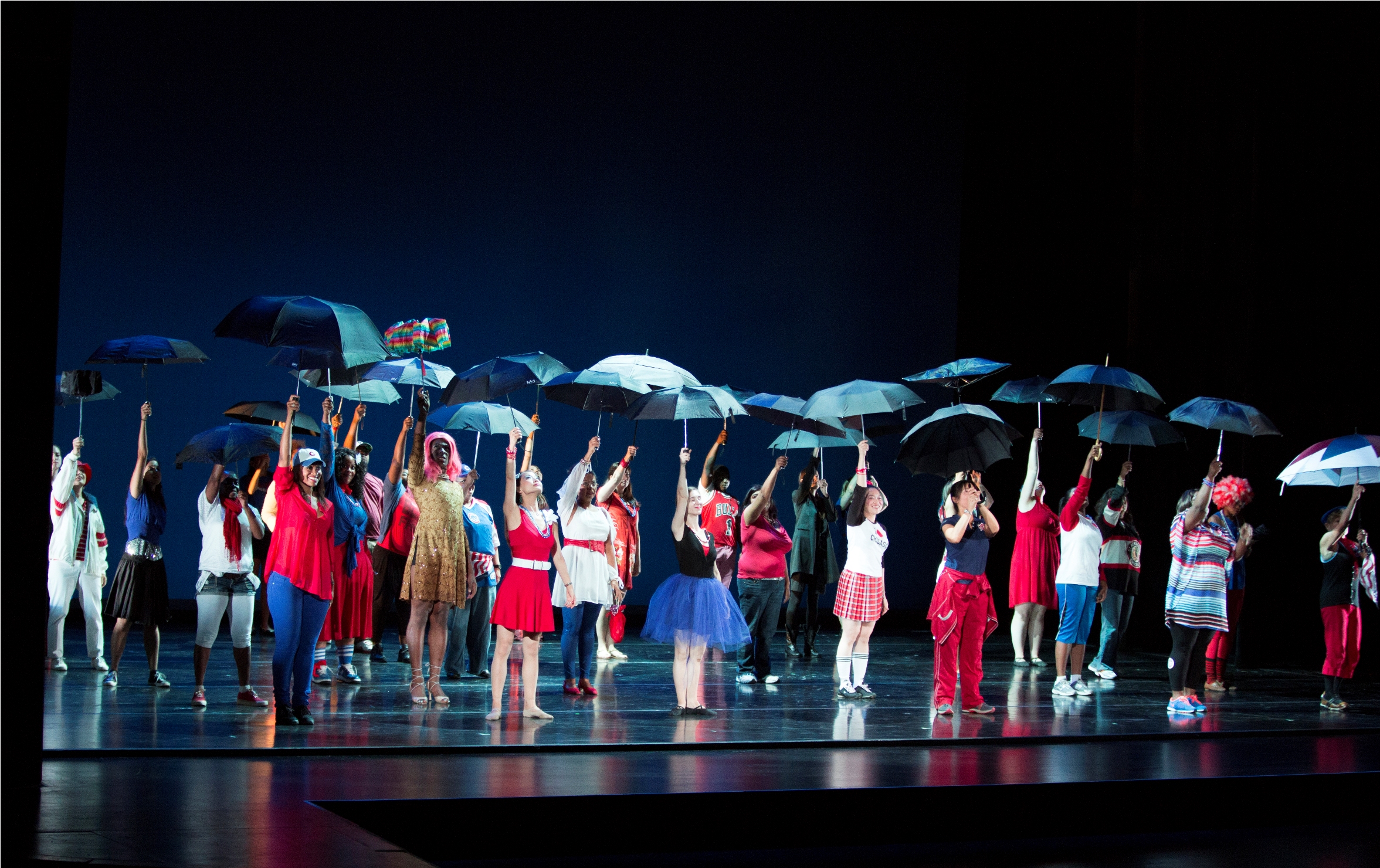
Bolero Chicago. Photo by Cheryl Mann.

The Chicago Dancing Festival (CDF), a week-long series of free dance events, came to a close Saturday night on the Pritzker Pavilion stage in Millennium Park.  A large crowd turned out on a beautiful night to witness dance from some of the top companies in the country as well as artistry from fellow Chicagoans.  Festival co-founders Lar Lubovitch and Jay Franke addressed the audience and introduced a casually dressed Mayor Rahm Emanuel before the show began.  “Hey Chicago! Hey dance lovers!” The performance opened and closed with local talent: the After School Matters Hip Hop Culture Dance Ensemble with Nicholas Leicther’s Touch of Soul in honor of Maggie Daley and Bolero Chicago with Larry Keigwin’s homage to our sweet home city.

Nestled in between the two large local numbers was a mini tasting of the best of the best in the current dance scene.  Houston Ballet performed Mark Morris’ Drink to Me Only With Thine Eyes with live piano accompaniment from Katherine Burkwall-Ciscon.  Dressed in comfy looking white blowsy tops and short leggings (can I get this in black?), the dancers skipped and skimmed across the stage in a light-footed romp that showcased Morris’ deftly musical choreography.  Two gala-esque performances by major ballet companies showed the range of classical ballet.  New York City Ballet stars Ana Sophia Scheller and Gonzalo Garcia dazzled in the show-stopping pas de deux from Marius Petipa’s  Don Quixote (1869). An early one-handed lift seemed to last forever and Scheller’s fouette run in the coda, featuring a double pirouette every second turn for the first 16 counts and one every third turn for the second half, had me jumping out of my seat.  Girl can turn.  Later, Sofiane Sylve and Vito Mazzeo from San Francisco Ballet danced Christopher Wheeldon’s pas de deux from Continuum (2002).  The couple brilliantly danced the Sleeping Beauty pas earlier in the week and proved they are just as stunning doing more contemporary work.

Two powerhouse companies represented the same kind of choreographic range in the modern/contemporary realm.  Martha Graham Dance Company performed an excerpt form Chronicle (1936), which they performed earlier in the week in its entirety.  Steps in the Street physically showed just how powerful women can be.   Local favorite Hubbard Street Dance Chicago danced an excerpt of Israeli choreographer Ohad Naharin’s Tabula Rasa (1986), giving an equally powerful performance in a more relaxed, freer style.

The Pritzker Pavilion is a wonderful outdoor venue that normally houses musical acts including the Chicago Symphony Orchestra.  With that said, the seating isn’t ideally designed for viewing dance.  The seats are directly behind one another and on a very shallow raking. My apologies to the woman seated behind me for “driving her crazy” by moving my head from side to side to see.  Unless you’d like a detailed account of the woman’s hair cut and color in front of me, it was a necessary evil.

Congratulations to everyone that worked, volunteered or performed at CDF 12.  It was a wonderful week full of terrific dance that won’t soon be forgotten.  All free.  We are lucky Chicago.


CDF 12: Dancing East & West of Chicago

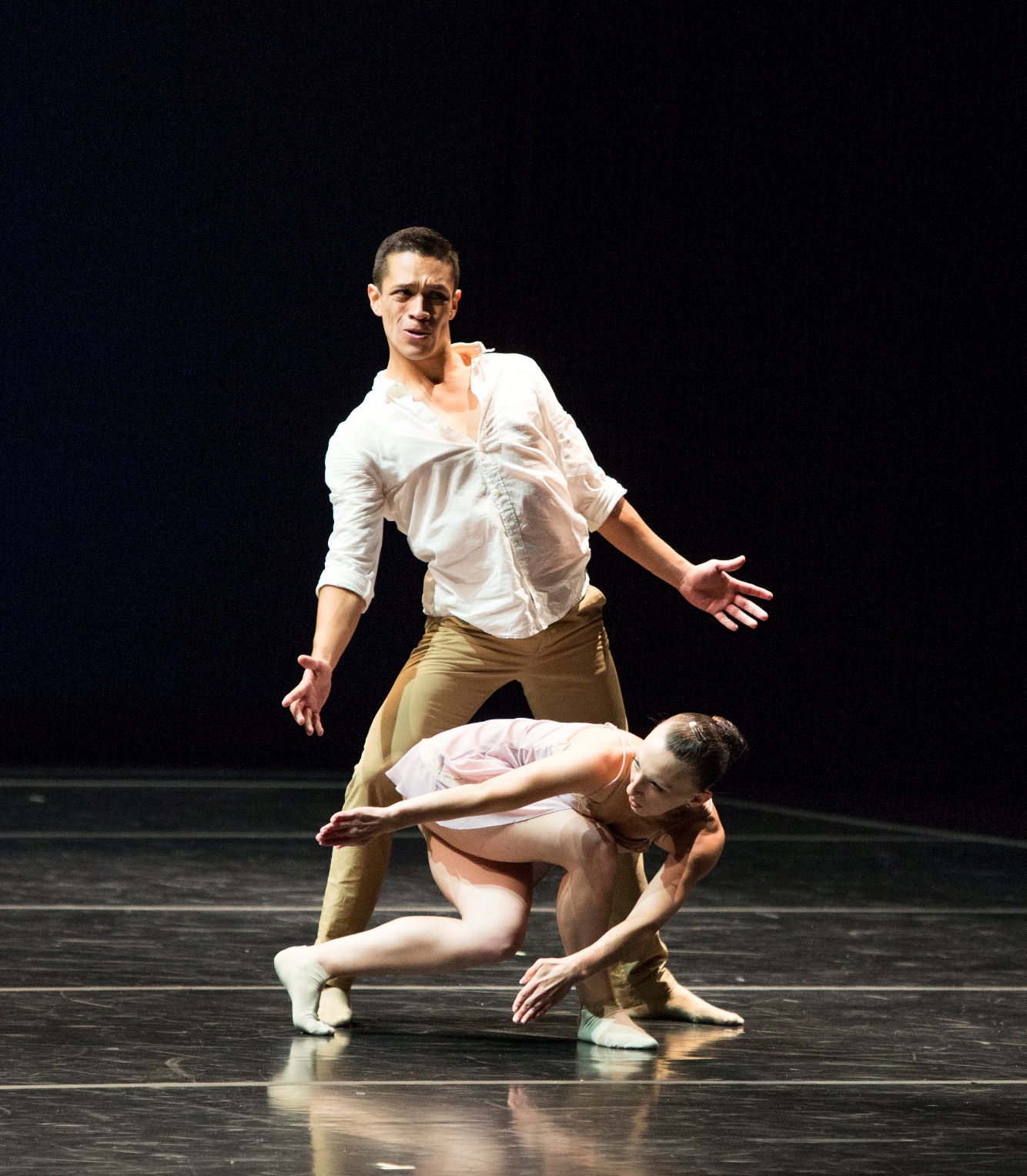
CDF 12 Giordano Dance Chicago in Alexander Ekman's "Two Become Three". Photo by Cheryl Mann.

The Chicago Dancing Festival continued last night with the Dancing East and West of Chicago program at the Auditorium Theatre at Roosevelt University.  Where Monday night’s Chicago Dancing show focused on local talent, Wednesday’s show featured companies from around the country.  The East was represented by Brian Brooks Moving Company and Martha Graham Dance Company, both from New York, and the West by Ballet Arizona, San Francisco Ballet (SFB) and Pacific Northwest Ballet (PNB) from Seattle.  Not only did the program represent dance companies from coast-to-coast, but the works presented spanned centuries from the 1890 classical ballet (Sleeping Beauty pas de deux) to 2011 postmodern (Brooks’ Descent).

Brook’s piece began with dancers carrying one another across the stage across their backs in a 45-degree plank.  The patterns were a meditation in strength and balance, but the most intriguing moments happened with props.  Dancers waving flat boards created wind gusts that animated pieces of tulle.  The effect was like the movie American Beauty, where the paper bag danced in the wind. Here, the fabric was doing the dancing, while the dancers did the grunt work. It was beautiful.  The other New York contingent presented an all-female work about reactions to war.  Chronicle (1936) highlights the strength of women with Graham’s signature contractions, pitches, cupped hands and severe drama.  The Red Shroud solo performed by Blakeley White-McGuire was particularly intense.  Ladies – fierceness be thy name.

A last-minute Midwest addition to the program was Alexander Ekman’s Two Becomes Three performed by two dancers from Giordano Dance Chicago (GDC).  Maeghan McHale and Martin Ortiz Tapia danced this quirky duet on Monday night at the Harris Theater.  They were delightful then and even better last night.  The audience loved them.

Although only one of the three ballet companies performed a work by George Balanchine, they all have ties to the famous Russian choreographer.  The artistic directors of Ballet Arizona (Ib Andersen), SFB (Helgi Tomasson) and PNB (Peter Boal) all danced for the company Balanchine founded, the New York City Ballet (NYCB).  All three have Balanchine works in their rep and employ dancers that fit in the quintessential Balanchine ballerina mold (read: short waists, long legs, gorgeous feet).  His trademark fast footwork and neo-classical style were on full display in the opening number by Ballet Arizona.  Rubies, an excerpt from his three-part ballet Jewels (1967) was pertly performed by the petite cast – except for soloist Kenna Draxton, who towered above the rest.  The tableau of 15 dancers in a semi circle, dressed in ruby red costumes, hands joined above their heads as the curtain opened was stunning.  What followed was a whirlwind of delight.  Shout out to Jillian Barrel and Nayon Iovino, quite the dynamic duo.

PNB dancers Lesley Rausch and Seth Orza beautifully performed Jerome Robbins’ Afternoon of a Faun (1953), which is set in an abstract dance studio with the audience serves as the mirror.  The haunting score by Claude Debussy lends a melancholic tone to the duet where the dancers seem more interested in their reflections than each other.  While this pas was more casual in tone and in dress (leotard and tights with hair down for her, tights and bare-chested for him), the Sleeping Beauty pas de deux, performed by SFB’s Sofiane Sylve and Vito Mazzeo, was full-out formal.  Normally danced at the end of the nearly three-hour ballet, this duet represents the marriage of the princess to her prince.  The sparkling tiara, tutu and tunic couldn’t out-dazzle this couple.  They were spectacular.

There was one slip up – literally – in last night’s show that I must mention, because I think it was the turning point -wow, no more puns I promise – of the show.  During the Beauty pas, Sylve slipped and fell.  Not just a “whoops!”, but a crash-and-burn on her…um, tutu.  The shock of it had made the audience gasp loudly, but Sylve got right up and finished with the grace and talent of the true professional she is.  I’m (almost) glad this happened for three reasons.  1. Shit happens -  when it does, you get back up and continue on.  2. It proves she’s human.  3.  It not only shows the audience, which more than likely had some ballet newcomers in it, that the stage was slick, but if a ballerina of this caliber can fall just walking to the upstage corner of the stage, it shows just how difficult it is be to dance a difficult pas in pointe shoes.  The slip upped the respect of the audience tenfold, because she made the rest of it look utterly effortless.
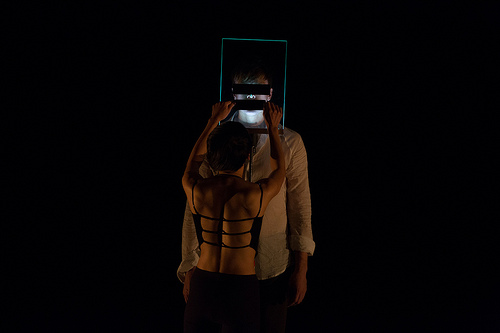
 

CDF12: Chicago Dancing

The Chicago Dancing Festival (CDF) kicked off its sixth year with a performance showcasing local talent.  CDF Board Chair David Herro welcomed the audience and took a few minutes to talk about the origins of the fest and its mission.  He said it’s threefold: 1) to make Chicago a national and international dance destination, 2) to keep elevating the dance form and building an audience by providing the best dance at the lowest possible cost – free!, and 3) to provide a forum, a place where these dancers can come together and watch each other perform.  Mission accomplished.

Our dance-loving Mayor was up next, introduced by Herro as “probably the only Mayor in the United States that can do a proper plié”.  (True and something I’m not ashamed to say I’m particularly proud of.)  Rahm Emanuel took the mic, quipping that his plié talent came in handy in the City budget meetings.  While introducing the opener of the show – a performance by After School Matters Hip Hop Culture Dance Ensemble, a program started by the late First Lady Maggie Daley – the current Mayor acknowledged the Daley family in the audience and said the work’s title Touch of Soul was perfect because “dance is the hidden language of the soul.  I can’t think of a better tribute to the soul of our city, Maggie Daley”.  Mayor Emanuel finished by thanking the family – “from the entire city, thank you for sharing her with us”. (Tear.)  That beautiful, but melancholy moment was short lived, because seconds later, 31 young dancers dressed in white took the stage in a world premiere by choreographer Nicholas Leichter with such energy and enthusiasm that the audience was whooping with joy.

Hometown heavy-hitters Hubbard Street Dance Chicago (HSDC) technically tantalized in the epic, exhaustive Scarlatti.  Choreographed for HSDC by Twyla Tharp in 2011, this work for twelve dancers is a testament to speed and stamina.  In their CDF debut, Giordano Dance Chicago (GDC) paired up with Swedish choreographer Alexander Ekman for a humorous duet featuring lead dancers Maeghan McHale and Martin Ortiz Tapia about life and love, but not necessarily a happy ending.  (Great job Maeghan and Martin!)  Intermission was abuzz with conversation, the packed theater a mass of movement, hand shakes and hugs.

The Joffrey Ballet opened Act II with William Forsythe’s In the Middle, Somewhat Elevated.  This contemporary masterpiece from 1987 changed the way people thought of ballet.  The stark set, the off-center partnering, the hyper-flexibility and “I don’t care” attitude wowed audiences then and continue to now.  Dancer Rory Hohenstein’s multiple, multiple pirouettes amazed.  (He later attributed them to a slippery stage.)  The finale of the show was a collaboration with choreographer Larry Keigwin, a few of his dancers and everyday Chicagoans.  Introduced by CDF co-founders Jay Franke and Lar Lubovitch, Bolero Chicago was a tribute to our city.  Big and small, short and tall, the dancers in this piece represented everyone.  A lady reading a newspaper, a woman walking her dog, a passerby smoking a cigarette, a commuter biking to work, a cluster holding on for balance on a bumpy el ride, and a man in drag losing a battle with his umbrella and the wind.  Bears, Bulls, Cubs and Sox tees – even Benny the Bull merrily flipping around the stage.  Illuminated cell phones lit the stage before bows were replaced by the “everyday” contingent jamming out on stage.

Chicago Dancing had something for everyone and everyone liked something different. Perfect.

Hubbard St to open 35th Anniversary Season with World Premiere

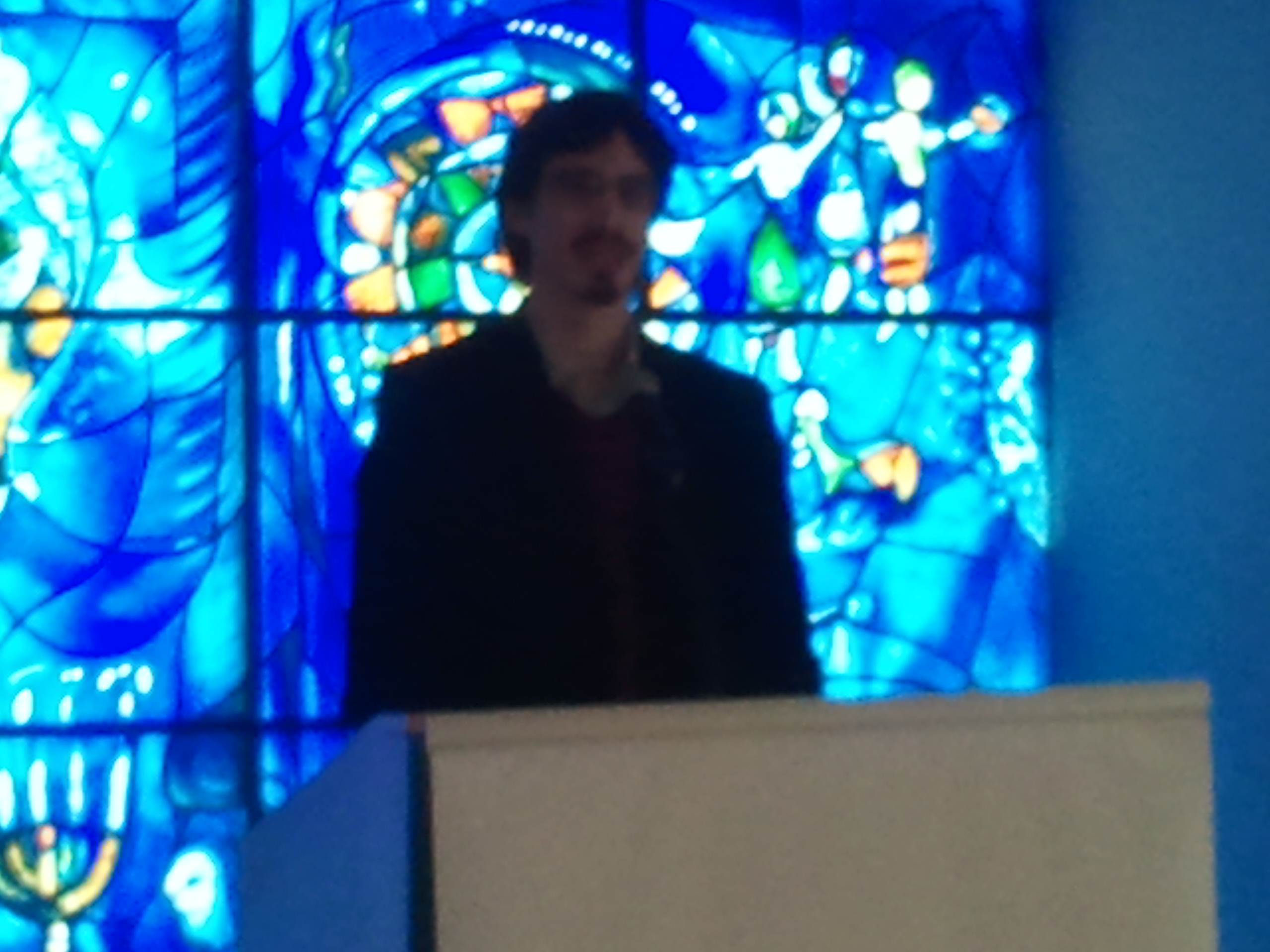
Hubbard St's Alejandro Cerrudo speaking at the Art Institute of Chicago in front of Marc Chagall's "America Windows".

Chicago’s own Hubbard Street Dance Chicago (HSDC) hits the 35-year mark next fall.  At a press conference this morning at the Art Institute of Chicago (AIC), HSDC Executive Director Jason Palmquist, Artistic Director Glenn Edgerton, along with AIC’s Associate Director of Performance Programs Mary Sue Glosser told a small gaggle of press about the exciting collaboration that will open the anniversary season next fall.  HSDC Resident Choreographer Alejandro Cerrudo, a rising international choreographic star, will create the company’s first evening-length work on a central theme inspired by Marc Chagall‘s permanent exhibit, America Windows.  Glosser talking about the seven-year partnership with HSDC says, “seeing works of art come to life in their choreography…is a joy beyond measure”.

Chagall’s stained glass masterpiece imbeds themes of music, painting, literature, architecture, theater and dance in a royal and cerulean blue swirl celebrating freedom of expression.  The work made to commemorate the Bicentennial was given to the City of Chicago in 1977, the same year Lou Conte started HSDC, in honor of the memory Mayor Richard J. Daley.  In turn, this new work will be given to the City of Chicago in honor of Mayor Rahm Emanuel and his commitment to making Chicago “a worldwide destination for dance”.  Commissioner for the City’s Department of Cultural Affairs and Special Events, Michelle Boone accepted the honor on the Mayor’s behalf joking that everyone knows he’s “crazy about dance”.  Edgerton took the mic telling us how all the connections came together to make this “a monumental season”.

Cerrudo’s new piece, set to music by Philip Glass, will premiere during the company’s fall series at the Harris Theater for Music and Dance, October 18 – 21, 2012.  The shy Spaniard took the opportunity say how grateful he was for the honor of creating this new work “in honor of the city that has become my home” and declared it a big challenge.  Taking inspiration from Chagall, he will take the “magic, colors and emotions” from the windows to create a non-literal interpretation focusing on how all the pieces and people (dancers) come together.  He suggested a working title of “A Thousand Pieces” for the full-company piece.

The rest of the 35th Anniversary season will be announced later. Subscription tickets go on sale in May.

Bringing the Heat

Joffrey dancers Christine Rocas & Rory Hohenstein in William Forsythe's "In the Middle, Somewhat Elevated". Photo by Herbert Migdoll.

In a pre-show video at opening night of Joffrey Ballet‘s Winter Fire program, artistic director Ashley Wheater says, “This company is eclectic and diverse, the repertory should reflect that”.  The three works presented from international contemporary choreographic stars William Forsythe, Christopher Wheeldon and Wayne McGregor were eclectic, diverse and showed the current company of dancers in a new light.  A big, hot spotlight.  This show reminded me of the Joffrey I fell in love with years ago.  A company that always pushed boundaries with challenging, interesting new works.  A company that made you sit up and ask,”What is happening on stage?”…in a good way.

This program pushed the dancers to a new level, challenging technique and complacency.  They rose to the challenge – they were hot!  The hottest of them all was Rory Hohenstein.  He hasn’t been featured much in his first season with the company (aside from a stand out solo at Dance For Life last August), but wow, keep your eyes on this one.  Last night, he was on fire.  A fierce presence in every piece, Hohenstein showed off his partnering skills, flexibility and attitude with every flick of his wrist, penché pitch and swing of his head.  Paired with Victoria Jaiani in two of the three pieces, he held his own with the dancer that has become the unequivocal star of the company (“All stars/No stars”? I’m not so sure that’s the motto here anymore).

Forsythe’s In the Middle, Somewhat Elevated featured these two in dazzling duets that were so intricate and hyper-extended you wondered how they got through them without being tied in a knot.  Jaiani’s incredible capacity for extension and impossibly thin frame punctuated the dark, downlit stage.  Similar in build and flexibility, Christine Rocas – let’s call them the bendy/flexy twins – showed her stuff alongside a strong cast.  There were some extraordinary things happening on the sidelines, particularly with April Daly, Amber Neumann, Anastacia Holden and Ricardo Santos that unfortunately got lost with so many things going on at once.  Also, the two lead females (Jaiani and Rocas) were supple and strong in the partnering, but seemed timid on their own.  I spotted Chicago Dancing Festival‘s Jay Franke and David Herro in the audience, with Mayor Emanuel and family.  Hint: this would look great on the Pritzker Pavilion stage in August! Yes for the Fest?

Joffrey dancer John Mark Giragosian in Wayne McGregor's "Infra". Photo by Herbert Migdoll.

The LED projections of figures walking displayed above the dancers in Wayne McGregor’s Infra was distracting at first, but became part of the movement theme happening below.  Inspired in part by the 2005 London bombings, McGregor takes the every day action of going to and from work and turns into an emotionally charged romp set to a cyber techno beat by Max Richter.  You could see a hint Forsythe’s influence at work here.  Again, a strong ensemble cast featuring virtuoso turns by all.  Amber Neumann showed her acting chops with a mental melt down center stage.  A large cast of extras walked across the stage sweeping her off with them alluding to the fact that life goes on.  Jaiani and Hohenstein end the work with another eye-popping duet.

Christopher Wheeldon’s After the Rain was the mid-show palette cleanser offering a softer break from the hard-hitting opening and closing numbers.  The music, Arvo Pärt’s Spiegel im Spiegel (which can make me weepy within the first three notes), was brought to life with accompaniment by Paul James Lewis, Paul Zafer and Carol Lahti.  A stellar cast of Jaiani, Hohenstein, Daly, Matthew Adamczyk, Fabrice Calmels and Valerie Robin added maturity and nuance to the work that was a company premiere in 2010.

Joffrey dancers Victoria Jaiani & Fabrice Calmels in Christopher Wheeldon's "After the Rain". Photo by Herbert Migdoll.

The duet by Jaiani and Calmels, which was stunning last season, was one of the most beautiful things I’ve seen on stage (aside, perhaps, from the Act II pas in Giselle).  What once had a breathtaking romantic feel, like how a young girl dreams her first time in love will be, evolved into a heartbreaking, lifelong love shifting in need.  For me, it took on a she’s-dying-and-he’s-taking-care of-her/Dying Swan vibe.  Whatever the impetus, it works.  As the donor’s rose to their feet in ovation, you could sense the many wallets falling open asking simply “how much?”.


Mayoral Proclamation #2

It’s seems our beloved Mayor Emanuel has been busy showing his love for dance.  On the heels of declaring this past Monday Bill Kurtis & Donna La Pietra Day for their contributions to the city’s arts and non-profit scene, he comes out with another proclamation making Friday, November 18, 2011 MERCE CUNNINGHAM DAY in Chicago!

This is to coincide with the Merce Cunningham Dance Company who will be in town November 18 and 19 performing at the Harris Theater (co-presented by the Dance Center at Columbia College) on the second to last stop on their Legacy Tour which kicked off two years ago.


Mayoral Proclamation!

Mayor Rahm Emanuel has officially declared today – November 7, 2011 – to be Bill Kurtis and Donna La Pietra Day in Chicago!  The couple receive this honor, along with the JUBA! Award at Chicago Human Rhythm Project’s Jubalee Gala tonight for their long careers and leadership in the non-profit and arts communities.  Chicago Commissioner of the Department of Cultural Affairs and Special Events, Michelle T. Boone, will be on site this evening to read the full proclamation.

Congratulations!

Thoughts on HSDC 2011 Fall Series

Dancers Jesse Bechard & Penny Saunders in "Arcangelo". Photo by Todd Rosenberg.

Last night was the big night!  Hubbard Street Dance Chicago‘s (HSDC) season opener at the Harris Theater with the world premiere of SCARLATTI by Twyla Tharp.  A packed house (they even had to open up the balcony) full of Chicago dance enthusiasts, including our favorite fan-in-chief Mayor Emanuel and his family, was virtually vibrating with anticipation for a great show.  As usual, HSDC did not disappoint.

Tharp’s SCARLATTI, set to the music of Domenico Scarlatti, opened the show.  Extremely musical; lightening fast, vivid footwork; carefree, fun attitude and work-your-tail-to-the-bone difficult.  In other words, quintessential Tharp.  The dancers made it look easy.  It isn’t.  Not by a long shot.  To say it is simply about the music and the dancing (although it is) is misleading.  There is nothing simple about it.  Using her evil genius mind and savant-like musical knowledge, Tharp creates a dizzying whirlwind of dancers entering and exiting the stage in a nanosecond.  Part of the dizzying effect was due to the costumes, designed by Norma Kamali.  White, black, neon yellow, stripes, leopard spot, headbands, arm bands…too much.  Quite frankly, the costumes were distracting.  The thirty-minute piece was non-stop, balls-to-the-walls dance finishing with a cute wave from new company member David Schultz as if to say, “hi, I’m here!”  Standing ovation.  The audience ate it up and Tharp postponed her bow to hug each of the dancers.

Nacho Duato’s Arcangelo, the next work on the program, is one of my favorite pieces in HSDC’s rep.  A reflection on heaven and hell danced by four couples is set to the music of Arcangelo Corelli and Alessandro Scarlatti, who was the father of Tharp’s composer.  HSDC brought the work into it’s rep last fall and is the only US company to perform it.  (You can read my interview with Duato from last fall here.)  It is gorgeous and the dancers performed it seamlessly.  One audience member stood up to applaud at the curtain before everyone else.  Mayor Rahm Emanuel.  Too cool.

Dancers Kellie Epperheimer & Kevin Shannon in "Walking Mad". Photo by Todd Rosenberg.

Walking Mad by Swedish choreographer Johan Inger closed the show.  Quite a few people had been talking about this piece, trying to convince me I had seen it before.  I hadn’t.  This is something you have to see to believe and you won’t soon forget it.  (Note to Alejandro: party hats, wall, Bolero…now I know!)  An ingenious mix of silliness, heartbreak, passion, despondency, acrobatics, strength and talent, set to the driving force of Ravel’s Bolero.  Originally created ten years ago for the Nederlands Dans Theater, the work utilizes a wall set piece that has the dancers moving through four doorways, around, over and on the wall which also lowers to the floor, raises and folds to create a shadowy corner.  I loved it.

Once again, to name stand outs would be to list every single performer.  New company members Schultz and Garrett Anderson (Alice Klock was not in this cast, but I’m hoping to see her on Sunday) fit in like they’ve been here forever and are definitely where they belong.  The show runs through Sunday and it is a must see.  HSDC just gets better and better.

CDF11 Wrap Up

Aspen Santa Fe Ballet in "Uneven". Photo by Cheryl Mann.

Last week was quite a week for dance in Chicago.  The Chicago Dancing Festival (CDF) presented five free nights of dance to eager audiences with an estimated 19,000 in attendance over the course of the week.  Many thanks and much gratitude to the CDF staff – Evin Eubanks (Executive Director), Todd Clark (Director of Production), Natalie Williams (Admin Assistant) and of course co-founders/Artistic Directors Lar Lubovitch and Jay Franke for showcasing such phenomenal talent and giving the city another chance to shine.  Mayor Emanuel attending three nights of dance has secured his place as dance in Chicago’s biggest fan.  I was lucky to be able to attend each night of the fest (I missed the free dance movies day) and I have to admit I was a little disappointed this Monday night when there wasn’t a kick ass show to go see.  Spoiled, but grateful.

Here are links to my coverage of the CDF events:  Opening Night Gala, Moderns, MCA Moves, Masters, Muses and Celebration of Dance.  Some of the highlights for me were Richard Move, Hubbard Street Dance Chicago (Too Beaucoup, Petite Mort), Lar Lubovitch Dance Company (The Legend of Ten), Paul Taylor Dance Company (Eplanade) and New York City Ballet artists Tiler Peck and Gonzalo Garcia (Tchaikovsky Pas De Deux).  I was surprised how much I enjoyed the Martha Graham Dance Company, Doug Varone and Dancers and Walter Dundervill’s work.  I can’t wait to see who CDF will bring in to perform next year.  Plan ahead: you won’t want to miss CDF2012!

Let me know what you think!  Did you go to any of the CDF shows?  What was your favorite?  Are you now a fan of a company you’d never seen before?  What would you like them to do differently next year?  What companies would you like to see at CDF 2012?