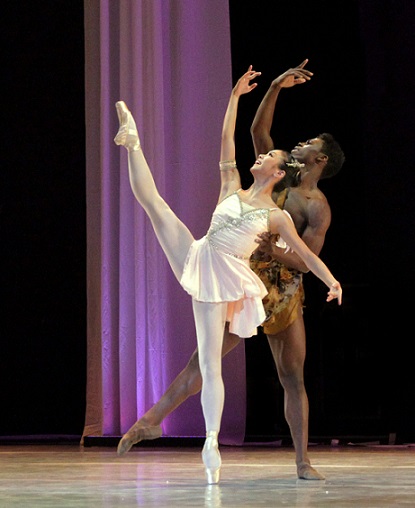
HS2′s Taryn Kaschock Russell: The Exit Interview

Hubbard Street 2 Director Taryn Kaschock Russell. Photo by Cheryl Mann.

On January 17th, Hubbard Street 2′s Artistic Director Taryn Kaschock Russell, rocked the Chicago dance world with this Facebook post: “After 17 amazing years in Chicago…I will be moving back to the east coast…”. You may think I’m being hyperbolic, but this petite powerhouse made a huge impact on the local dance scene. She will be missed. The impetus of the move comes via her husband Greg, who was recently named the new Company Manager for the New York City Ballet. “He started out at SAB (The School of American Ballet),” Kaschock Russell tells me over the phone from her West Loop HSDC office. “To be back managing the building that he learned in, some parts seem full circle.” The couple met while dancing with the Joffrey Ballet soon after the company made the transition to Chicago from New York in 1995.

Kaschock Russell grew up on the East Coast. She graduated high school early and planned on joining Boston Ballet II, but ended up at the Joffrey School in New York right before they declared bankruptcy – “It was a really amusing situation.” – and spent a year in NYC with her brother (dancing with David Parsons) and sister (on scholarship at Ailey). During her seven years at Joffrey, she made quite a name for herself in principal roles including the “Cowgirl” in Agnes de Mille’s Rodeo and as the first female outside of David Parson’s company to perform his six-minute, jump-laden solo Caught. In 2002, she joined Hubbard Street and was soon recognized as a “25 To Watch” in 2003 by Dance Magazine. After retiring from the stage, she began teaching and setting works for Hubbard St as part of the artistic staff – had a baby! – and in 2008, took over as director of the second company, HS2.

RB spoke with Kaschock Russell earlier this month about her career, leaving Chicago at the end of April and what’s next. Here are excerpts of our conversation:

First of all, I’m very sad, but happy for you too.

I know. It’s the same type of emotions I’m having too.

I know you from your Joffrey days. Let’s talk about Caught. Did your brother dancing for David Parsons have anything to do with you getting the part?

Yes and no. David knew me beforehand. I used to sit there and watch when it was only David doing the role. I remember sitting at City Center in the front wing when I was 15, watching David. I’m very proud of this story. I never went in and asked for anything, I didn’t believe in that. I believed in hard work and that should be acknowledged. But when I found great out that David was coming and that they were doing “Caught” that it was one of those opportunities in a career.  So I said, I’m going to get my shit together and I’m going to go in during my lay off and I’m going to tell Mr. Arpino that I just want to learn it. I want to be in the room. I know that women can’t do it, but I want to be in the room and learn it. I walked in and they had the schedule up during lay off, before I went to talk to him, and there were three names on the list to learn it. It was Davis Robertson, Harris Jones and me. I never said anything! He just put me in there.

I have to say, seeing you do that solo was one of the coolest things I’ve seen in Chicago dancing. It was so awesome to see a girl do it. How hard was it? It was all jumps! 

Thank you. It kicked my ass. Basically you have to keep jumping because you don’t know the timing of how the strobe works. It was a ton of trial and error. It is all jumping. After the first or second day, I’d blown out my quads. I had no idea what that was. I couldn’t walk up stairs. My legs kept giving out and then I’d have to go to rehearsal and they were like three-hour-a-day rehearsals. We would do it over and over again. I remember very vividly, he (David) pulled me aside after having me do something like ten more times than the guys did it and he said, “You just bought yourself a matinee missy, if this company will let me put a woman on”. It was really hard. First of all, it took a while to even have the stamina to do it. Still when I was in the wings before I went on, I would feel almost physically sick, because I knew how tired I would be at the end. At the same time, the audience experience is unreal. It’s like a rock performance. I knew that from watching him, but when you feel that and you’re on the stage and the whole audience freaks out that certainly ups the adrenaline. There’s that perseverance of I’m going to get through this.

You came to Hubbard Street in 2002. What made you switch?

I can’t believe I haven’t told you this story. One of the things I loved and was fortunate enough to grow up with was original creations, original choreography. At Joffrey, I got to do that a small amount, but it wasn’t happening quite as often. I had been watching Hubbard Street for years. We always traded tickets. The first inkling when I considered Hubbard Street was after I had just seen NDT’s (Nederlands Dans Theatre) performance of “Petite Mort” on an arts channel. It was the very first piece of choreography on television that made me cry. It was so beautiful and so unexpected and musical. I swear within a week of me seeing it, we got a newsletter at Joffrey saying that Hubbard Street had acquired “Petite Mort”! I remember freaking out. I went to see it and it was right after they’d learned it, so I think the company was still settling in to that kind of partnering, so the experience of watching it from the third balcony at the Shubert didn’t match how I felt watching NDT do it. I thought,ok, I’m still where I’m supposed to be right now. I was kind of getting a bug where I wanted to do more contemporary work, but I wasn’t there yet. Then I had a life-changing experience at Joffrey dancing “Appalachian Spring”. Yuriko Kikuchi came in to set it. The entire experience for me changed a lot of how I was viewing performance or what I get out when I’m learning. She was so giving. She’s very demanding, but so rich with information and not any part of that information felt selfish. She just wanted it to be ours and to watch it grow. It really was profound, the entire exchange and getting to dance that role and working with her. By the time I got to the stage, all I wanted to do was live in it and perform it in that way. I don’t think I’d experienced anything to that point. The process of learning it and putting it on stage was perfect in so many ways. At the same time, I was at a party with Cheryl Mann. She was going through the exact same kind of profound experience (at Hubbard Street). She said, “There’s this man, Ohad Naharin.” She started to describing the initial time he was there for “Minus 16″.  The improvisation, pushing them outside their envelopes, telling stories, how he was using their vocals and everything that went into mounting that first “Minus 16″. So she and I made a pact. She was going to come see “Appalachian Spring” and I would go to see “Minus 16″. They had done “Petite Mort” in that program and then the last thing was “Minus 16″. That time “Petite Mort” floored me. I was in tears. The way they were dancing together was seamless. And “Minus 16″ sealed everything. I think I looked at Patrick Simonello, who was with me, and said, “What am I doing with my life? And why am I not doing this?” It changed everything. I certainly had never thought of staying in Chicago. When you change companies, you normally move cities. I thought I’d go to Europe, or San Francisco or another ballet company. That performance just did it. That’s what I want to do with my life. I wanted to do the work, which made a huge difference and why I’m still here.

HS2 ladies: Emilie Leriche, Alicia Delgadillo, Taryn Kaschock Russell, Felicia McBride and Lissa Smith. Photo by Todd Rosenberg.

Tell me about the transition from dancing to artistic staff.

One of the reasons I stopped dancing specifically is that we were touring so much and I wanted to have a family and that wasn’t working out. It just wasn’t happening. I stopped dancing in December and within a month, Jim (Vincent) asked me to come back to set a piece. Julie (Nakagawa) and Andreas (Böttcher) had just resigned, so there was an interim year where HS2 had a rehearsal director and trying to figure out what to do. I set one piece on second company and shortly after they named me rehearsal director. It wasn’t a full-time contract. I didn’t go on tour, but when the company was here, I was here. Two months after I stopped dancing, I got pregnant. So I was rehearsal director and going back to school (studying Psychology at Northwestern) and pregnant. I really was crazy. I was responsible for remounting works from scratch. I started teaching class for the company. The transition was really smooth. Right after I had Donovan, they had a conversation with me about working with the second company. Basically, from the second I started working with the second company, it was history, because I just fell so in love. I came in the first day. My first group was with Jacqueline (Burnett, Hubbard St.) and Eduardo (Zuniga, Luna Negra) and Ethan (Kirchbaum, River North) How could you not fall in love with them? They were so hungry for information. I started giving corrections on a piece I already knew and the amount that it impacted them within 24 hours was so profound that I was floored. It was two things. It was exhilarating and beautiful and it was scary as hell. They will take what I say and it will mean this much to them. It will make an impact in their lives. The responsibility of it was overwhelming. It was the same way with becoming a new parent. The opportunity to impact lives in that way and help produce change that was meaningful for them. And to just give, in the same way, strangely enough, that I feel Yuriko had given to me. The way she gave to me made me want to give the same way to other people.

What is your teaching/mentoring philosophy?

I’m a little bit crazy. I’m not kidding. I make a fool out of myself every single day, multiple times a day. I’m so not self-conscious about who I am that they feel more comfortable being who they are and I make sure that can happen. I really, truly believe that HS2 needs to be a safe environment for exploration. I give this lecture every single year. You walk into that room and you are there to support each other. You support each others’ failures and successes. You root for everyone to succeed. Not everywhere is like that. I feel that the second company’s experience needs to be a place where they can try and fail in order to get to where they’re going to get to next. You have to fail. You have to fail in big ways and small ways and be able to try things that are ridiculous. The room is a safe room. I really look at everyone individually and try to develop groups that will work to feed off each other’s strengths and weaknesses. I would never want a group of individuals that is very similar, because there’s not enough diversity in the room to add. Everyone comes in with their own experiences and it adds to how everyone grows. They see each other change and I think it helps them. Nobody should want to leave two years later as the same person. They want to be transformed. My directing is trial and error. I’m trying things out. If it doesn’t work, I try other things. I don’t walk in with the answers. I walk in with every bit of information that I have and I give them everything that I have. Even if it’s “I don’t know”. I’m very honest. I try to be extremely honest about what their strengths and weaknesses are even when it’s hard. There are always difficult moments. It takes a lot of confidence on my own part to sit down and know that I’m not going to make someone hate me by saying something difficult. That’s growing up on my part. Laughter. Laughter is enormous. It’s allowing emotion to be shown. Our pieces are set up that they’re theatrical. They’re contemporary internal. They’re always asking for “you” to be in there. Your personality has to be in there. Especially for 18 to 25-year-olds, that can be super uncomfortable. Allowing the time to be ridiculous and silly in that safe atmosphere. You need to be somewhere where you aren’t judged for trying.

What advice would you give to the next director of HS2? 

Allow yourself to be changed. Observe and learn from the people you’re directing. People learn from example. I love the education outreach we do. I believe in it so wholeheartedly. My love for those things goes to my dancers. My willingness to think outside the box in situations and create site-specific improves so they look the best. As I open my mind to things, their minds are open as well, because they see the person in front of the room be excited and inspired. Also, believing the dancers are really special. They are special and they are worth serious investment. Each group of them will change. Adapt to your companies and leading them with strong examples without fear. If you’re asking them to give all of that to you and to create a safe environment, then you have to do it too. You have to lead by example.

What’s in your future in New York?

One of the things I’d like to do is stop touring. He’ll be touring some, so I want to take the opportunity to be the one not leaving. I’ve been fortunate to be able to have worked with a lot of choreographers and NYC isn’t a small dance town. I’ve developed some friendships. I’ve put out some feelers at university programs. That age group fascinates me because they want to learn. But I would be lying if I didn’t say some of the companies there would be interesting to work with. I’m not going towards one thing there. I’m looking forward to spending a little time and teaching in different places and figuring out what might make the most sense. I’m pretty non-committal. My first priority is getting settled and finding where we want Donovan to be in Kindergarten.


Benjamin Wardell/The Nexus Project: It’s Complicated

Benjamin Wardell and Michel Cintra.

It starts with two men working with 12 different choreographers separately, then they take the material and remix it. In the meantime, funds need to be raised, a venue found and confirmed and the final product created. Much like the mind behind The Nexus Project – it’s complicated. Benjamin Wardell is not new to the Chicago dance world. He danced with Hubbard Street Dance Chicago for four seasons in a wide range of works by Nacho Duato, Alonzo King and many by resident choreographer Alejandro Cerrudo, among others. After he left Hubbard Street, most thought he’d retired from dance and/or moved away. Lucky for us, he didn’t.

Before coming to Chicago, the Memphis-native danced for the Cincinnati Ballet and Alonzo King’s LINES Ballet. Now a freelance dancer (a touring stint with Azure Barton and Artists and currently with Lucky Plush Productions), he’s also teaching at Extensions Dance Center, Visceral Dance Center and occasionally at Lou Conte Dance Center. He’s the official videographer for Luna Negra Dance Theater and River North Dance Chicago as well as a freelance photographer. He also does repetiteur work setting piece from the Hubbard Street rep around the country and is in charge of the company’s summer intensive program in Iowa. “I’m all over the place,” he said. “For me, that’s great. My brain is in 20 places at once. Whenever I would get into a company, I would eventually feel compressed by the lack of variety. Even just going in the same building every day. Now, I’m in so may place that I stay calm to make sure I don’t forget anything. That lifestyle works better for my internal make-up.”  For the upcoming project he’s teaming up with dancer Michel Rodriguez Cintro (of Hedwig Dances) and a dozen local choreographers for an exciting and ambitious project tentatively scheduled to premiere later this fall.

RB sat down with Wardell earlier this year to talk about his career, past and present.

Hubbard Street is currently in collaboration with Alonzo King/LINES Ballet. You’ve previously said that working with Alonzo for a long period of time is transformative and that it changes the way you dance. Is it also emotionally taxing?

Yes. He pushes really hard. The work is not particularly emotive, but it’s emotionally taxing because you’re always pushing really hard. He expects you to always be generating thought. In a way, your creativity with your movement maxes out, because he always wants it to be different every time and you perform the same piece like 130 times, but if you do it the same 2 or 3 times, he’ll call you out on it. “You need to explore that section of movement in a different way.” Part of the transformation was how to get creative doing the same movements and embracing the constant change. One of the good things is it prevents that subtle death of the choreography where it starts to look comfortable.

When you decided to leave Hubbard Street, what was going through your head?

I started to realize I wasn’t built for companies. It’s becoming easier to freelance and the sound of being in control of what I was doing was appealing. I thought it was pliable for me to do. I got to the point where I’d achieved all my institutional goals. At this point, I’d rather make something new that’s a “swing and a miss” than do a masterpiece that was made for someone else. I found myself at this place where I wanted to be generating stuff rather than learning choreography. That combined with I was getting into video and photo work and wanted to explore those avenues. I needed to be on my own in a way that I could do a lot of things. I had a vague thought about wanting to produce work, but that was the least part of my original plans. 

Why did you call the new project The Nexus Project?

I’d been calling it the “Two Man Show” since it’s inception, but I though that was a little generic for product packaging. I talked to a friend of mine that does marketing and he said I should have an overarching name. “The Nexus Project” was the first thing I came up with. The idea for the project, having all the choreographers and an open rehearsal process for the second half, is that the two of us, rather than being in a bubble, are the crossing point for all the spokes.

How did you pick Michel?

He choreographed for The A.W.A.R.D.S. Show and I was like “who the fuck is this guy and how have I lived here for two years and not know him?” I saw Chino (Michel’s nickname) dance and was shocked that he would be in this city and I had no idea. So I introduced myself. I need to find another guy that I can share the stage with for an hour and be on even ground with and who is available to do the amount of rehearsals needed. That list was short, because of all the demands.

How did you pick the choreographers (*listed below)?

It took me three or four months to hash out the project, it was a pretty slow process. It started off with just wanting to explore male duets. So a two-man show, then I started to think about my particular strengths and weaknesses. I’m not good with or particularly good at generating movement. That was a bit tricky. So what if I work with other choreographers? What am I good at? Outside of dancing, my secondary talent or other interest is coordinating people and finding connections between disparate parts, partly because my brain exists in that place. The way that things connect is how I see thing. I love complexity, so I should make a complicated process, because I’m going to feel at home in it. It’s going to tap into my capacity spectrum. Part of it was wanting to deal with the hierarchy of dance. Every choreography has a different methodology, but the way dance gets made is essentially the same in terms of the choreographer coming into the room and being in charge and making a piece and then leaving. That basic structure doesn’t really change. I’ve never been in a process that has more choreographers than dancers. Let’s try that. And, frankly, I just like the number 12.

Is there a choreographic theme to the show?

No. This is one of the aspects of the show that I’m most proud of – the process. It wasn’t one of my goals, it’s something I realized had happened once the process was set. The 12 choreographers have that truly rare consequence-free environment. That have two dancers who can do pretty much anything they can come up with, who are willing to try whatever, from the most risky to the most strange. We will do whatever you ask us with zero judgment. They get 12 hours of rehearsal each and they get to keep the work, but they’ve given us permission to use them. The choreographers came from wanting to represent the community, to give credit to all the stuff going on. I want people to have total freedom. At the end of February, whether they’ve finished their piece or not, I’m done with that phase of the project and need to move onto the second, which is the remixing process, an open rehearsal process (for donors) and putting the show together. A big part of why the second part is open is that studio time is our favorite time as dancers and yet we never let anyone in. 

What are your hopes for The Nexus Project?

In terms of the final show and guaranteeing it being not terrible, priority number one is “Don’t Suck!” Especially if you’re trying something new. It’s terrifying because this is all my little new idea and I haven’t had any experience with it aside from having a choreographer set work on me. The basis of the show that will make it at the very least not a waste of time, is that they’re going to come see some good damn dancing. You’re going to see two real good male dancers who are real good at dancing with each other and can hold a 60-70 minute show no matter what we’re doing. I felt like we would get better at dancing together more quickly if we had to work with a bunch of different choreographers than if we were spending the same number of hours just doing our own thing. It’s hard to avoid self-indulgence when you’re totally in charge. Having to go from style to style, I feel like we’ve gotten to know each other’s dancing fairly quickly.

For more details on The Nexus Project and to donate to the Kickstarter campaign (ends Wednesday, Jan. 23!) click here.

*Choreographers include: Harrison McEldowney, Francisco Avina, Autumn Eckman, Robyn Mineko Williams, Julia Rhoads, Penny Saunders, Ron De Jesus, Jonathan Meyer and Julia Rae Antonick (Kechari), Nicolas Blanc, Jonathan Fredrickson, Matthew McMunn and Daniel “Brave Monk” Haywood.


Chicago Dance 2012 Highlights

Alvin Ailey American Dance Theatre dancers in "Revelations". Photo by Christopher Duggan.

Nothing says end-of-the-year-review time quite like the last day of the year…am I right? My proficiency in procrastination aside, now is the time to reflect on the past year and look forward to new, exiting surprises in the next. Here’s my Dancin’ Feats year-end review for Windy City Times that came out last week noting 12 memorable performances/performers of 2012, but I wanted to add a few more things.

Looking back at my notes and programs from the year (yes, they are all in a pile, I mean filing system, in the corner of my bedroom) I am so thankful for all the wonderful dance I get to see. Narrowing it down to 12 “top whatevers” was not an easy task for there were too many people and performances to name. Here are some other performances that are still in my thoughts:

Alvin Ailey Dance Theater in Ohad Naharin’s Minus 16. Although Revelations is still amazing, seeing this company in more contemporary work was refreshing. And the audiences at Ailey performances are a show unto themselves.

Paris Opera Ballet and American Ballet Theatre‘s performances of Giselle were stellar for their star-studded casts on opening night, but ABT’s Sunday matinee with real-life couple Yuriko Kajiya and Jared Matthews stole my heart.

Luna Negra Dance Theater founder Eduardo Vilaro brought Ballet Hispanico to town with former Chicago dancers (Jamal Callender, Jessica  Wyatt and Vanessa Valecillos) back for a rep show at the Dance Center to much acclaim, while current director Gustavo Ramirez Sansano continues to take the company in new and fascinating directions.

The Seldoms, in their tenth year, deconstructed the Harris Theater and traipsed around the world to collaborate with WC Dance in Tapei, while tackling the ongoing arguments around climate change with artistic director Carrie Hanson’s trademark wit and intelligence.

Before Hubbard Street Dance Chicago turned 35 this fall, it said goodbye to retiring, beloved dancer Robyn Mineko Williams. Artistic Director Glenn Edgerton completed his goal of presenting all five master European choreographers in the rep with the acquisition of Mats Ek’s Casi-Casa. Ek’s work took the company to a new level, but I’m still haunted by their dancing in William Forsythe’s Quintett from the summer series.

The Joffrey Ballet performed Forsythe’s In the Middle, Somewhat Elevated in their regular season and at the Chicago Dancing Festival. I was proud to be an official CDF blogger for the second year in a row. New to the fest this year was Giordano Dance Chicago, now celebrating 50 years. And Muntu Dance Theatre of Chicago hit 40!

River North Dance Chicago dancer Ahmad Simmons deserves a mention for his work in Ashley Roland’s Beat, particularly his performance on the Pritzker Pavillion stage in Millenium Park.

Special thanks to Catherine Tully of 4dancers.org for her continuous and generous encouragement and insight. Thanks lady!

Dance writing-wise, I’m thankful for the opportunity to write for Front Desk Chicago, Windy City Times, 4dancers and Dance Magazine.

I could go on (and on…), but tomorrow is a new year and I look forward to seeing more incredible dancing and dancers in our most awesome city. Happy New Year!


Hubbard Street Shines in Ek’s Work

Hubbard Street dancers Ana Lopez and Alejandro Cerrudo in Mats Ek's "Casi-Casa". Photo by Todd Rosenberg.

Opening night of Hubbard Street Dance Chicago‘s Winter Series at the Harris Theater last night marked the first time a U.S. company has presented the work of Swedish master choreographer Mats Ek. Well-known in Europe for his theatrical creations for stage and film, Ek has worked with acclaimed dancers like Sylvie Guillem and Mikhail Baryshnikov. Now, with the help of dancers Ana Laguna and Mariko Aoyama, he takes our very own Hubbard Street dancers to new, extraordinary heights in his 2009 work Casi-Casa. A mash-up of two of his previous works, Appartement and Fluke, Casi was originally created for Danza Contemporánea de Cuba in 2009. Also on the program, Aszure Barton’s grand Untouched and two works by resident choreographer Alejandro Cerrudo.

Although last on the evening’s program, Ek’s Casi is what everyone came to see. Even founder Lou Conte was there to witness his company make history. And make history they did, for once they raised the bar for themselves, the audience, the city and the country by excelling in this work, they can never go back. The cast of 12 dancers was stellar, but it was the staging and choreography that transfixed. Casi-Casa was stunning, ugly, casual, urgent, funny, human, disturbing and wonderful. Ek’s way of taking a mundane gesture or activity and turning it into something alternately beautiful, endearing and disgusting is true brilliance. With a cast of misfit characters like TV Man, Vacuum Woman, Stove Couple and Door Couple, the 40-minute piece flies by and leaves you wondering just what the hell happened. No, really…WTF just happened? Poking, sniffing, sighing, spitting, grabbing and whistling mix easily with insanely difficult, breathtaking dancing set to a score as schizophrenic as the characters. Vacuum cleaner-wielding women dance an OCD-frenzied jig, a couple struggles to stay together while tragedy roasts in an oven, and a man makes being a couch potato an art form. The work has everything you never thought you’d see on stage in a dance and then some. There is a sexual undercurrent throughout – a hand to the breast, a foot to the crotch, a groping embrace – that is sometimes nonchalant, purposeful, sad and almost crude. One of the most beautiful moments was a delicate, loving duet between Jesse Bechard and David Schultz. A section with no dancing had yellow and black caution tape zig-zagged across the stage as Hitchcockianly dangerous music blared as if to say, what happens in between these walls should not be seen. But Ek lets us look anyway.

Barton’s Untouched is a beautiful work that brilliantly showcases these dancers talents. Originally created on Hubbard Street in 2010, Barton incorporated bits of the dancers personalities into the movement. Even though a few of the performers have changed, the delicate intimacy of the gestures remain, punctuated by strong technique and creative partnering. With a lush red curtain pulled back on stage right as a backdrop and an almost formal informality to the structure, it is reminiscent of Edwaard Liang’s Age of Innocence, but on LSD. It’s just a little off. Where Liang’s duets are pristine with a feminine sense of longing, Barton’s transforms the women – Ana Lopez and Kellie Epperheimer – into wounded birds seeking freedom. Where Liang works within the structured lines of Victorian court dances, Barton takes that framework and alters it with syncopation and weight. Unexpected moments of impatience – a fast hip bounce, a dancer frantically running in place – dot the more serene essence of the dance. The dancers are at home in this piece. Plus, anything that begins with the gorgeous Meredith Dincolo in a floor length dress is assured to be spectacular.

In between Barton and Ek was a suite of dances by Cerrudo. Both have his penchant for dark lighting and mood, but to different ends. Blanco, a study in minimalist movement for four women, and PACOPEPEPLUTO, a tongue-in-cheek romp for three men to Dean Martin songs, highlight the rising choreographer’s serious and light sides. Both used similar movement vocabulary with results at the opposite ends of the dance spectrum. The audience seemed in awe of the raw physical beauty of the women, but the charming men – Johnny McMillan, Schultz and Pablo Piantino – captured their hearts wearing nothing but dance belts. Recently named to Crain’s Chicago Business’ “40 Under 40″ list, Cerrudo shows what he can do with just music, lighting and bodies. While all the dancers deserve high praise, Cerrudo gets a special mention. With his busy schedule traveling the world setting his work, he hasn’t graced the Harris stage – aside from choreographic bows – since last March. He showed that he still has the chops to hang with and stand out in this amazing group of dancers. Bravo!

Hubbard Street Dance Chicago’s Winter Series runs through Sunday, Dec. 9 at the Harris Theater, 205 E. Randolph. For a 20% discount on tickets use the code: CASI at www.hubbardstreetdance.com/winter.

Hubbard Street’s Quinn B Wharton: Man of Mystery

Hubbard Street dancer Quinn B Wharton. Photo by Cheryl Mann.

Her: What’s the B. stand for?

Him: It’s a good question, isn’t it? I’ll never tell.

Her: Ooh, it’s top secret!

Him: It’s more interesting that way, right? There’s no period.

Her: Is that an artistic statement?

Him: It’s like that on my birth certificate, Quinn B Wharton. There’s a reason.

Her: Do you want to tell me?

Him: Then you’d know and it would be no fun. Maybe I’ll tell you someday.

That’s how my conversation began with the tall, lean, talented dancer at Hubbard Street Dance Chicago. Quinn B – no period – Wharton was bright, blithe and downright bewitching when we met over tea (for him, he was recovering from a cold) and decaf (for me, ’nuff said) two weeks ago. Who is this man with the mysterious initial and missing punctuation? I did my best to find out.

Wharton grew up in Seattle and began taking hip hop classes with a friend through an inner city outreach program. Pacific Northwest Ballet School‘s Dance Chance program took notice and offered him a scholarship. After a five-year “drought” in his training when his family moved to Hawaii, he relied on the wisdom of his ballet-teaching grandmothers to find him a teacher to get him back in shape. A summer program at San Francisco Ballet (SFB) led to three years at the North Carolina School of the Arts before he returned to San Fran to join the ballet company’s trainee program, or second company, while completing his degree via correspondence. Wharton danced with SFB, under the direction of Helgi Tomasson, for seven years before joining Hubbard Street in the summer of 2012.

In 2008, during SFB’s 75th Anniversary season, Wharton sustained a lower back injury that kept him from dancing. He used his down time to develop an impressive talent in photography. After “working like hell” on his ballet come back, he started traveling and auditioning to see what else was out there in the dance world. Now, he joins fellow SFB alums Garrett Anderson and Pablo Piantino at Hubbard Street.

Wharton, 25, will be dancing the opening “TV Man” solo in Swedish choreographer Mats Ek’s Casi-Casa this weekend at the Harris Theater. Hubbard Street’s Winter Series will be the first time an American company has presented this work. Also on the program, Canadian choreographic phenom Aszure Barton’s Untouched, a dense and grand work make for the company in 2010, and a coupling of short works by resident choreographer Alejandro Cerrudo. One is a quartet for women, the other a trio for men.

Ek has been in and out of town working with the dancers for a while, but is aided by his wife/muse Ana Laguna, who notably danced a duet with Mikhail Baryshnikov at the Harris Theater in 2009, and repetiteur Mariko Aoyama, who is well-known for her work with Pina Bausch. A rehearsal earlier this fall for the “TV Man” solo had Laguna riffing on the finer points of chair slumping and nose picking. Here is a peak into the rehearsal process filmed by HMS Media:

Wharton (also a gifted videographer) started his Hubbard Street career with a bang. Only two weeks in, he found himself learning Twyla Tharp’s SCARLATTI to replace an injured dancer the next night at the Chicago Dancing Festival. Welcome to Chicago! Here’s a bit of our chat on working with Ek.

I’ve read a lot of articles and interviews in the past few years and most of the dancers say they want to work with Ek. Is he someone you aspired to work with?

He wasn’t, actually…until now.

Since he wasn’t on your list, what makes it…

Amazing? It’s watching someone that’s been so thoroughly in his craft for so long, so specifically. It’s very different from how most dance is portrayed. It’s almost like from a theater background. You can tell from what he makes for film. I don’t know what it’s like when he creates, but it seems like he comes into the room with these characters and bases dances on them as opposed to creating movement and infusing it with character, which is what most people do, if at all. He’s a little soft-spoken. He’s tall. He wants really big movement. He’s not irrational with what he expects, but he does demand a lot. He’s respectful, which is nice. When he came back this past week, we were working on the TV solo. Watching it is really weird, but hearing him talk about it, makes complete sense. At first it seemed really obscure. The TV Man is in love with this game show hostess on tv and you write her a bunch of letters and she doesn’t respond to you. You love her, but you hate her and this couch is always here for you and it’s your friend you love it. There are people out there like that and it allowed me to relate to what I was doing.

What was it like working with Ana and Mariko?

I can see why Mariko was here first. She’s super sweet. She’s very detail-focused. She gave us a lot of information very quickly. She’s fast and she pushes. She’s quirky and she’s worked in very contemporary dance for years with Pina Bausch. They both just give us a base, because they know Mats will come in later. Ana is a sweetheart, beyond sweet. Obviously she knows Mats work inside and out.

In rehearsals you were playing with a black bowler hat. What’s with the hat?

What IS with the hat? I like hats. I am the hat man, as well. I die at the end of my solo. I turn the tv off and I die, because that is my world. “Vacuum Lady” comes on and has a hat. I go for it and she takes it away. I put it on and she sends me somewhere. It’s very conceptual. Either it’s another world or I’m a spirit. I provide transition and “slight leadership”. Every time I come in to change a scene, I’m wearing the hat…except for the finale.

Hubbard Street Dance Chicago presents its Winter Series at the Harris Theater for Music and Dance, 205 E. Randolph, on Thurs., Dec. 6 at 730 pm, Friday-Saturday, Dec. 7-8 at 8 pm and Sunday, Dec. 9 at 3 pm. Tickets are $25-$99. Call 312.850.9744 or visit hubbardstreetdance.com.

Hubbard St Shatters Own Glass Ceiling

Hubbard St dancer Jonathan Fredrickson in Alejandro Cerrudo's "One Thousand Pieces". Photo by Todd Rosenberg.

The lights dim, the audience settles and music begins to play. The tone is set for an evening of wonder and Hubbard Street Dance Chicago does not disappoint. One Thousand Pieces, inspired by Marc Chagall’s America Windows at the Art Institute of Chicago, celebrates the company’s 35th anniversary season with the first full-length work for the company and the first full-evening work by one choreographer – resident choreographer Alejandro Cerrudo – around a central theme. Bringing both the main company and HS2 dancers on stage together for this world premiere, Cerrudo takes this world-renowned company to a new level of its ever-reaching creative heights.

The curtain opens at the Harris Theater to a lone dancer (Jonathan Fredrickson, hanging briefly on to the ascending curtain) in front of stunning visuals. Blue hues flood the stage highlighting moveable set pieces, some opaque, some clear, some reflective, that look like staggered pieces of glass. A special mirrored Marley floor adds to the reflection/glass theme. Costumes are subdued with dark sheer tunics with a hint of pink or blue underneath for the ladies and dark blue pants with sheer black shirts for the men. The score, a collage of music from Philip Glass and designed by Cerrudo, completes the mood. Once the awe of the scene takes hold. The audience is ready for the dance.

Dancers slide in and out of duets, trios and group work with control and ease. Cerrudo features some – Ana Lopez and Garrett Anderson in frequent, lovely duets threaded throughout, Fredrickson, Jacqueline Burnett, Jessica Tong, Meredith Dincolo and Jesse Bechard – but it’s the moments with all 24 dancers on stage together that really make an impact. The end of Part 1 has everyone doing the same movement, but in alternating directions off three vertical lines having a reflective effect – aided with the mirrors behind them – as if they are multiplying. An interlude between Parts 1 and 2 has Fredrickson floating above the audience like the spirit “Ariel” in The Tempest (from a way too visible harness) reciting a romantic text from an excerpt of Glass’ Einstein on the Beach: Knee Play 5 (*full text below). It could be a nod to the angel or literary figure from the Windows, but that seems to literal for Cerrudo. It’s more likely a love letter to art, to dance, to Glass, to his company, to his fellow dancers and to the audience.

Hubbard St dancers in Alejandro Cerrudo's "One Thousand Pieces". Photo by Todd Rosenberg.

Part 2 brings together the brilliance of the choreography, sets, costumes (both by Thomas Mika), lighting (Michael Korsch), special effects (fog courtesy of Big Shoulders Productions) and dancing in a perfect storm of magic. Shining sparkles dot the floor looking like someone scattered shattered glass across the stage. As dancers move across, the realization hits that it’s water. Three light/fog columns flow down like waterfalls and dancers appear through them from the darkened stage behind to dance in the water. Simply gorgeous.

With that visual still in mind, the shock of intermission was a disappointment and it was a bit difficult to get that vibe back for Part 3, which continued with fantastic dancing from the entire Hubbard Street crew. All the dancers brought their A-game (new company members Laura O’Malley and Quinn Wharton fit in seemlessly), but the true star of the show was Cerrudo himself.  If he’s thinking about topping this any time soon, he better get started now. Wow.

One of the dancers posted to “come get lost” on his Facebook page yesterday. It’s easy to get lost in this world Cerrudo creates completely. A program note quotes Chagall, “Stained glass has to be serious and passionate. It is something elevating and exhilarating.” Serious, passionate, elevating, exhilarating – the perfect description of One Thousand Pieces.

Hubbard Street Dance Chicago presents One Thousand Pieces at the Harris Theater, 205 E. Randolph St., through Sunday, October 21. Tickets are $25-$99. Call 312.850.9744 or visit hubbardstreetdance.com.

Harris Theater box office: 312.334.7777.

*Original text source: Samuel Johnson:

The day with its cares and perplexities is ended and the night is now upon us. The night should be a time of peace and tranquility, a time to relax and be calm. We have need of a soothing story to banish the disturbing thoughts of the day, to set at rest our troubled minds, and put at ease our ruffled spirits.

And what sort of story shall we hear ? Ah, it will be a familiar story, a story that is so very, very old, and yet it is so new. It is the old, old story of love.

Two lovers sat on a park bench with their bodies touching each other, holding hands in the moonlight.

There was silence between them. So profound was theire love for each other, they needed no words to express it. And so they sat in silence, on a park bench, with their bodies touching, holding hands in the moonlight.

Finally she spoke. “Do you love me, John ?” she asked. “You know I love you. darling,” he replied. “I love you more than tongue can tell. You are the light of my life. my sun. moon and stars. You are my everything. Without you I have no reason for being.”

Again there was silence as the two lovers sat on a park bench, their bodies touching, holding handls in the moonlight. Once more she spoke. “How much do you love me, John ?” she asked. He answered : “How’ much do I love you ? Count the stars in the sky. Measure the waters of the oceans with a teaspoon. Number the grains of sand on the sea shore. Impossible, you say. Yes and it is just as impossible for me to say how much I love you.

“My love for you is higher than the heavens, deeper than Hades, and broader than the earth. It has no limits, no bounds. Everything must have an ending except my love for you.”

There was more of silence as the two lovers sat on a park bench with their bodies touching, holding hands in the moonlight.

Once more her voice was heard. “Kiss me, John” she implored. And leaning over, he pressed his lips warmly to hers in fervent osculation…

Sneak Peek: Hubbard Street’s One Thousand Pieces

Hubbard Street dancers Ana Lopez and Garrett Anderson in front of "America Windows". Photo by Todd Rosenberg. Marc Chagall © 2012 Artists Rights Society (ARS), New York / ADAGP, Paris.

Yesterday morning I popped in on rehearsals at Hubbard Street for Alejandro Cerrudo’s much-anticipated new full-length work, One Thousand Pieces,  inspired by Marc Chagall’s America Windows housed at the Art Institute of Chicago. This was the first rehearsal with the mirrors covered and with the dancers getting used to new elements (which I’ve been asked not to reveal), so there was some experimentation with aspects of the movements and a lot of starting/stopping as is necessary in a cleaning rehearsal. With that in mind, what I saw was a company fresh, focused and on the verge of something big.

Preparing for next week’s world premiere celebrating the company’s 35th anniversary at the Harris Theater (Oct. 18 – 21) is a collaborative effort engaging all Hubbard Street dancers – main company and HS2 – with all artistic staff hands on deck. Hubbard Street rehearsal director Terry Marling, HS2 director Taryn Kaschock Russell and dancer Penny Saunders (who is expecting a baby – congrats Penny and Pablo!) take turns running rehearsals and helping Cerrudo mold his new masterpiece.

The little bits I saw – and, frankly I wanted to stay and watch all day – were enough to make me believe this work will be something spectacular. Here’s a little glimpse into the process filmed by HMS Media:

Hubbard Street Inside the Studio: One Thousand Pieces


Happy Anniversary to RB!

Last week – September 24th to be exact – Rogue Ballerina turned 3! While there are ups and downs to having a one-person-pony-show dance blog (up: getting to see tons of kick-ass dance, down: burn out, making very little $ – read 0.00), and while I honestly consider scrapping the whole thing about once a week (sometimes daily), I’m still having a helluva good time doing it. I get to meet amazing artists one-on-one (even if it’s via phone) and discuss what they love passionately. I’ve been exposed to genres and styles I never would have come across in my normal “post-dancer/civilian” life and my knowledge base and tastes have evolved exponentially (I am now a full-fledged Forsythe fan!).

Going over some of the posts from the last year, my belief that Chicago is a world-class city for dance has only grown. From the big dogs like Hubbard Street Dance Chicago and Joffrey Ballet, to small start-ups like Leopold Group and Elements Contemporary Ballet and everything in between, the Windy City has myriad opportunities to see great dance and a ceaseless artistic creativity that is unmatched.

Someone recently told me they appreciated my enthusiasm. While I’m certain some find it annoying, it was greatly appreciated. I see myself more as a cheerleader for all dance in Chicago as opposed to a critic (although I sure do have my opinions).

On the writing front in the past year, I took over the monthly dance column at Windy City Times, covered the sixth annual Chicago Dancing Festival as one of the official bloggers for the second year in a row and had the pleasure of writing Hubbard Street’s Robyn Mineko Williams’ transition notice for Dance Magazine, as well as my usual gigs as a culture writer for Front Desk Chicago and CS Magazine. Other noteworthy events – and there are way too many to list here – include interviewing Twyla Tharp (terrifying!), singing “Happy Birthday” to Ann Reinking and seeing Batsheva Dance Company, Merce Cunningham Dance Company on the final leg of The Legacy Tour and the American Ballet Theatre (live) and the Paris Opera Ballet perform Giselle live (via simulcast).

Goals for the upcoming year include officially meeting fellow dance lover Mayor Rahm Emanuel (instead of just smiling and nodding in passing at events – an interview would be stellar!) and moving forward with a book project (or two) near and dear to my heart and possibly throwing some advertising up on this mug.

Thanks to everyone who reads RB!

Feeling the love,

Vicki


Wunderkind Whittenburg

Zachary Whittenburg - photo by Todd Rosenberg.

If you’re at all familiar with the Chicago dance scene, you know his name.  He’s been a dancer, choreographer, teacher, student, panel moderator, writer, critic and “insatiable audience member.” Locally, he’s danced with Hubbard Street Dance Chicago, Lucky Plush Productions, Same Planet Different World Dance Theatre and Molly Shanahan/Mad Shak. After graduating high school two years early at age 16, he moved to Seattle to train at Pacific Northwest Ballet School and joined the company at 18. After three years at PNB performing works by choreographers ranging from George Balanchine to William Forsythe, he moved cross-country to dance with North Carolina Dance Theatre, where he was a soloist for a season before coming to Chicago to dance with Hubbard Street for two years.

He then traveled for a year performing Crystal Pite’s choreography with Les Ballets jazz de Montréal. He’s also written for many publications and websites including Flavorpill, See Chicago Dance, Windy City Times, Hoy Chicago, Time Out Chicago, Dance Magazine, Pointe Magazine, Dance International magazine (where he recently got the cover story!), Dance Teacher magazine, Dance Spirit magazine as well as his own blog, trailerpilot. Zac Whittenburg: wunderkind, indeed.

Now, Whittenburg is taking his career in a new direction. Almost a decade after dancing with Hubbard Street, he returns to join the external affairs team at the beginning of an exciting landmark season that will include a full-length world premiere by resident choreographer Alejandro Cerrudo, a work by Swedish choreographer Mats Ek and a collaboration with Alonzo King LINES Ballet.

I spoke with him over Labor Day weekend, just before he started in his new position.

When you danced with Hubbard Street, which choreographer or pieces were your favorites or that you had a deep experience with?


I’ll never forget the experience of learning “Minus 16″ [by Ohad Naharin]. It’s probably the piece I performed most when I was in the company. I might’ve done over 100 performances of it in two years. It’s such an extraordinary piece. It asks so much of the dancers as artists. We did a piece by Jirí Kylían for five dancers called “No More Play.” It runs like a wristwatch, the way the characters and the vocabulary intersect with each other, and how the sections turn from one into the next. I’d never been so close to something that was built that way. I learned so much about choreography just by being involved with that.

Why did you leave Hubbard Street?


Well, there are two answers to that question. A dancer’s career is very short, and things run their course. And it was around the time that I became aware of Crystal Pite’s choreography. I saw a video of “Short Works: 24,” which I think was the first piece she made while she was in residence [at Les Ballets jazz de] Montréal. I was aware of her when she was a member of Frankfurt Ballet, which sort of became today’s Forsythe Company, but hadn’t seen her choreography before. I wasn’t aware of the things she was doing using Forsythe’s movement vocabulary in a dance theater context. I thought that was really fascinating, and that she was doing it with a lot of intelligence and humor. I wanted to work with her. I had the wonderful fortune of doing Crystal’s evening-length work ["The Stolen Show"] all over Canada and in Asia and in the United States. To get to see so much of the world, and to have the reason for that travel be that you’re bringing this work to audiences all over…it was a once-in-a-lifetime experience. There was a sense of purpose. A feeling that we were a company of ambassadors for contemporary dance.

Let’s talk about your new gig at Hubbard Street. What is your official job title and what will you be doing?


I’m going to be the company’s manager of communication. I have a pretty good understanding of what I’ll be doing, but of course, I’m not in the chair yet. It’s a great position because there are a lot of different angles to it. A large part of it is press relations and working with media outlets to get the word out about what the company is doing. That said, that comes in a variety of flavors. The conversations that I had in the interview process…we were talking about how the media landscape is changing. Part of this job is going to be working on getting the word out about a company when the channels about how the word gets out about a contemporary dance company like Hubbard Street are changing. There are new channels opening, old channels closing, a whole new landscape of how people receive information. I’m thrilled to walk into the challenge of, how do you work with that, and how do you get the most out of what the current media landscape is, anticipate how it’s going to change in the future and use all of that to your advantage, to make sure people know what Hubbard Street is doing, make sure they are aware of the variety of things we do in addition to the production and stage work, and how those things relate to one another. I’m excited to talk about our partnerships with other institutions and put stories in places where the company hasn’t been covered before.

You’re coming in right at the beginning of the 35th Anniversary Season, which is a big deal. What do you expect to be doing on day one?


I know I have a meeting on Tuesday morning with some other managers. It’s great that literally the first thing I’ll do is touch base with people in other departments to see what they’re doing and what they have planned for the near future. I haven’t been in that building very much in the last eight years. I have a lot of catching up to do, not only meeting the people that make the magic happen, but what the company’s overall strategies are. There are a lot of things that I’ve already learned about the 35th Anniversary season and there’s a lot more that I don’t know yet, so I imagine a lot of it will be about finding my place in relation to all those initiatives, cooperating with the other team members and figuring out how I can help them.

You know I like to joke around about how we’re arch nemeses, but I hope you really know that I’m a huge fan. Your voice, not only in the Chicago dance scene, but nationally, is really important and you have a big fan base, so what does your new job mean for trailerpilot?

The blog still exists. When I was full-time at Time Out Chicago, I wasn’t posting a lot. At this point, I’ve got 426 posts on the blog. It’s a big archive and I will continue to make the annual payments to make sure people can find it. I’ve always been interested in things other than just dance and choreography. I’m glad I’ll still have a place, where, if I go see a film and really have something to say about it, I can. My voice will still be out there, I’m still on Twitter, although long form writing about dance isn’t appropriate while I’m manager of communication for a dance company. I think, just in going back over my career with you, over the phone this morning, it’s just been one episode after another of all of these different things I’ve done, and all of my various experiences constantly coming back around and intersecting and sort of morphing together in new ways. Writing is one of those things. I’m certain that will continue. I don’t have my mouth stapled shut, but Hubbard Street is going to be the star in my sky. I love the company. I love where it’s been and where it’s going. I’m really looking forward to helping them get in front of more people and new audiences.


CDF 12: Celebration of Dance

Bolero Chicago. Photo by Cheryl Mann.

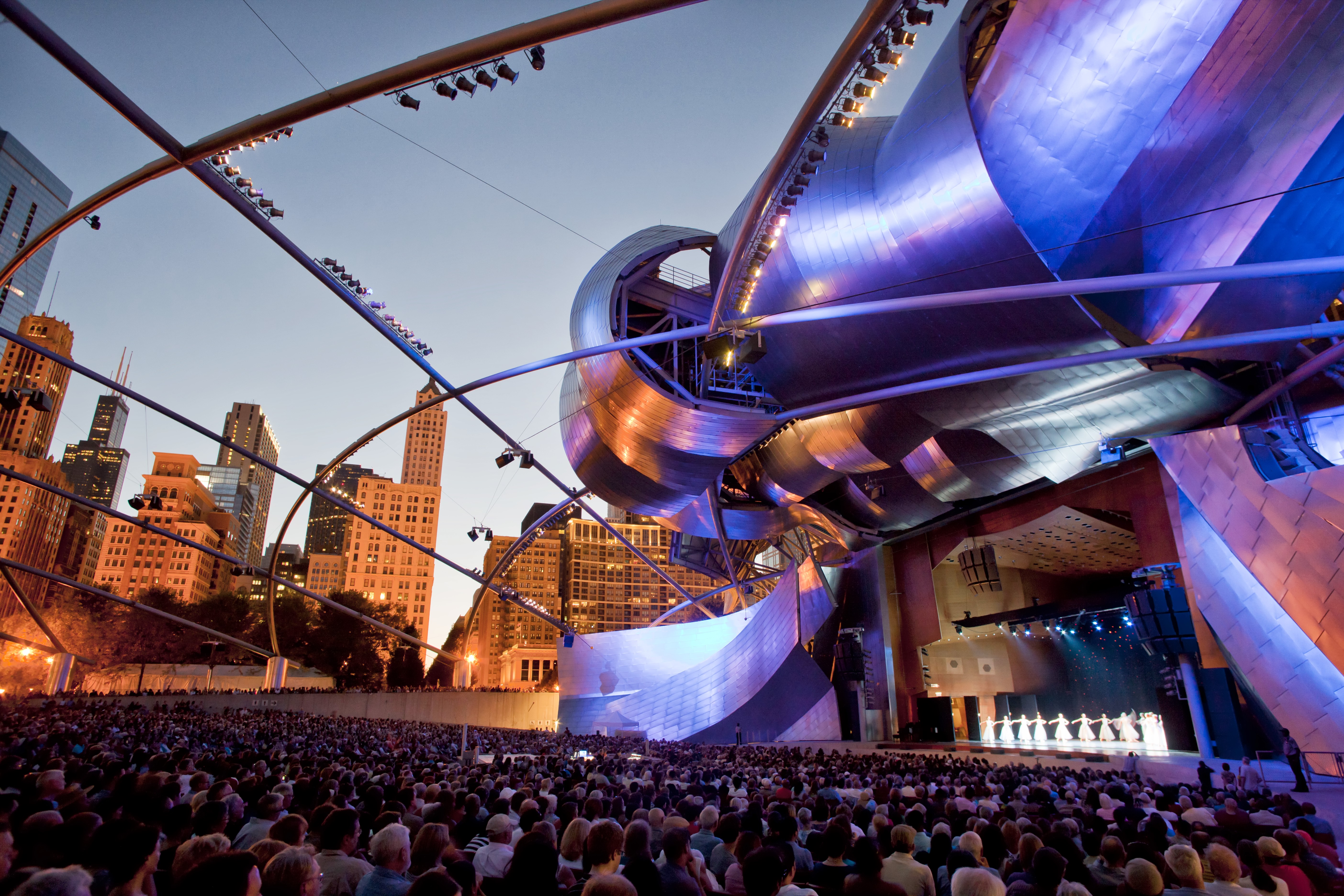
The Chicago Dancing Festival (CDF), a week-long series of free dance events, came to a close Saturday night on the Pritzker Pavilion stage in Millennium Park.  A large crowd turned out on a beautiful night to witness dance from some of the top companies in the country as well as artistry from fellow Chicagoans.  Festival co-founders Lar Lubovitch and Jay Franke addressed the audience and introduced a casually dressed Mayor Rahm Emanuel before the show began.  “Hey Chicago! Hey dance lovers!” The performance opened and closed with local talent: the After School Matters Hip Hop Culture Dance Ensemble with Nicholas Leicther’s Touch of Soul in honor of Maggie Daley and Bolero Chicago with Larry Keigwin’s homage to our sweet home city.

Nestled in between the two large local numbers was a mini tasting of the best of the best in the current dance scene.  Houston Ballet performed Mark Morris’ Drink to Me Only With Thine Eyes with live piano accompaniment from Katherine Burkwall-Ciscon.  Dressed in comfy looking white blowsy tops and short leggings (can I get this in black?), the dancers skipped and skimmed across the stage in a light-footed romp that showcased Morris’ deftly musical choreography.  Two gala-esque performances by major ballet companies showed the range of classical ballet.  New York City Ballet stars Ana Sophia Scheller and Gonzalo Garcia dazzled in the show-stopping pas de deux from Marius Petipa’s  Don Quixote (1869). An early one-handed lift seemed to last forever and Scheller’s fouette run in the coda, featuring a double pirouette every second turn for the first 16 counts and one every third turn for the second half, had me jumping out of my seat.  Girl can turn.  Later, Sofiane Sylve and Vito Mazzeo from San Francisco Ballet danced Christopher Wheeldon’s pas de deux from Continuum (2002).  The couple brilliantly danced the Sleeping Beauty pas earlier in the week and proved they are just as stunning doing more contemporary work.

Two powerhouse companies represented the same kind of choreographic range in the modern/contemporary realm.  Martha Graham Dance Company performed an excerpt form Chronicle (1936), which they performed earlier in the week in its entirety.  Steps in the Street physically showed just how powerful women can be.   Local favorite Hubbard Street Dance Chicago danced an excerpt of Israeli choreographer Ohad Naharin’s Tabula Rasa (1986), giving an equally powerful performance in a more relaxed, freer style.

The Pritzker Pavilion is a wonderful outdoor venue that normally houses musical acts including the Chicago Symphony Orchestra.  With that said, the seating isn’t ideally designed for viewing dance.  The seats are directly behind one another and on a very shallow raking. My apologies to the woman seated behind me for “driving her crazy” by moving my head from side to side to see.  Unless you’d like a detailed account of the woman’s hair cut and color in front of me, it was a necessary evil.

Congratulations to everyone that worked, volunteered or performed at CDF 12.  It was a wonderful week full of terrific dance that won’t soon be forgotten.  All free.  We are lucky Chicago.